
Last updated November 25, 2026
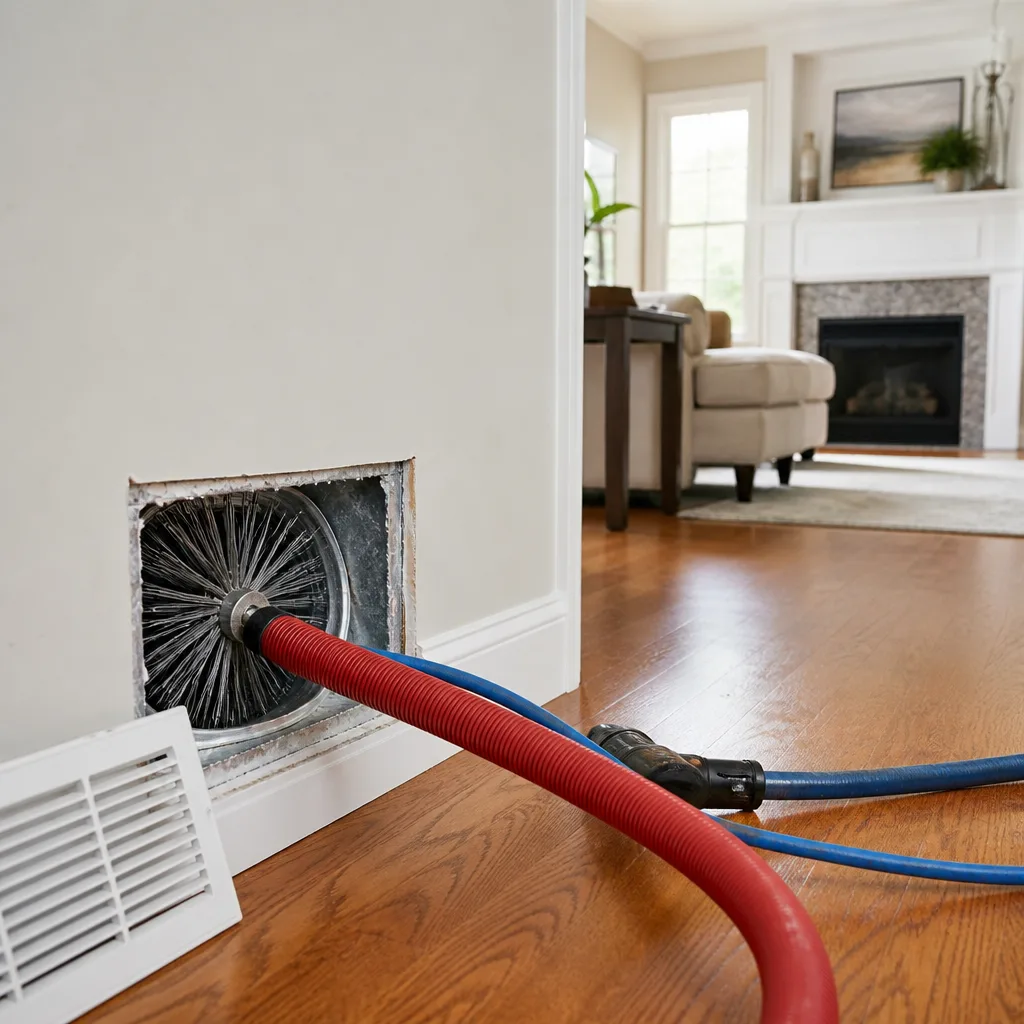 Whole-home duct cleaning
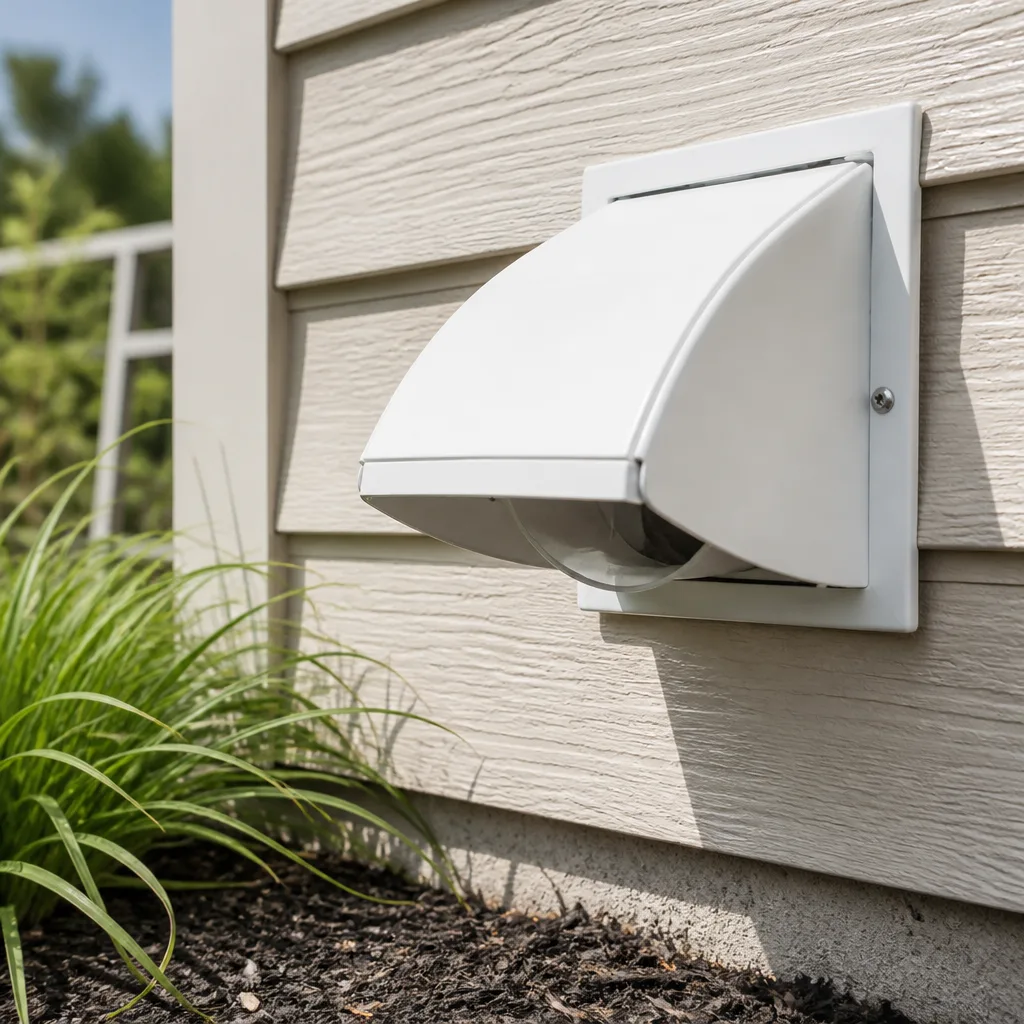 Dryer vent cleaning
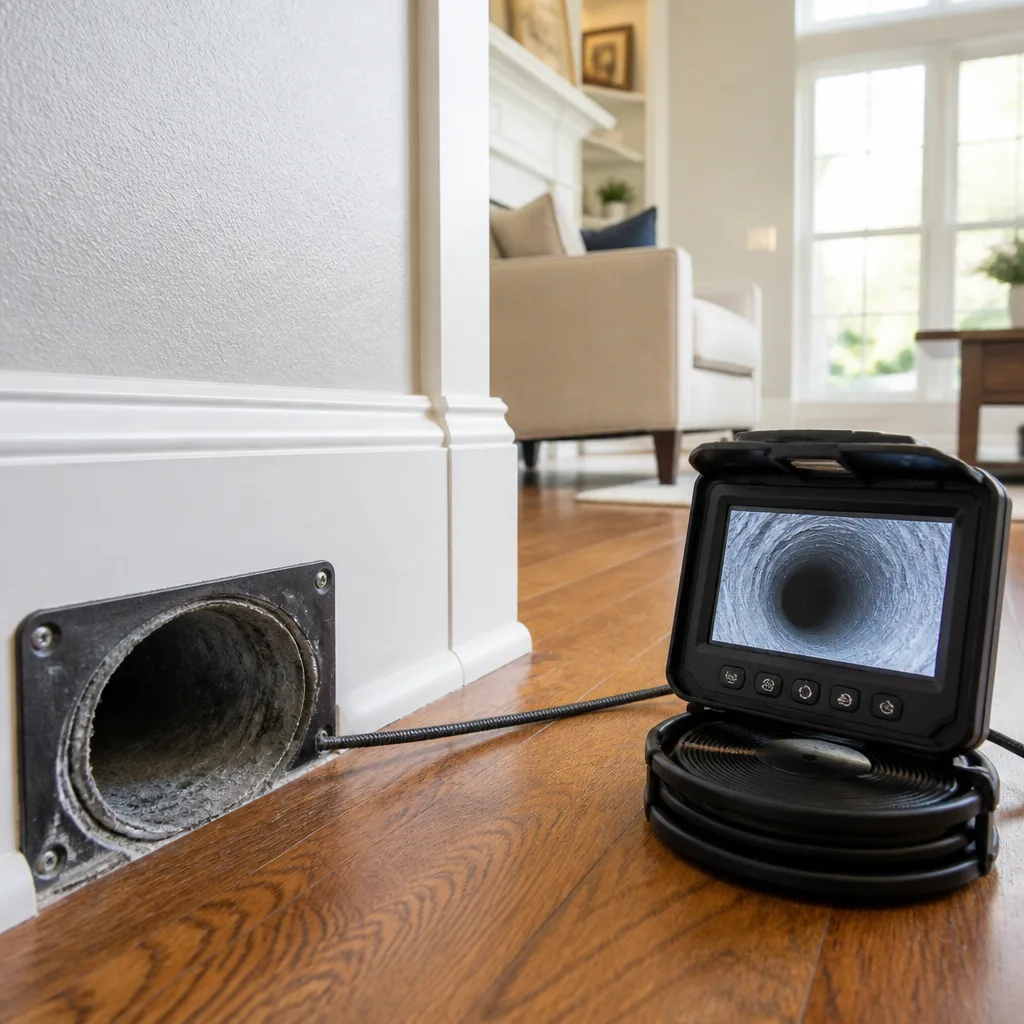 Camera inspection
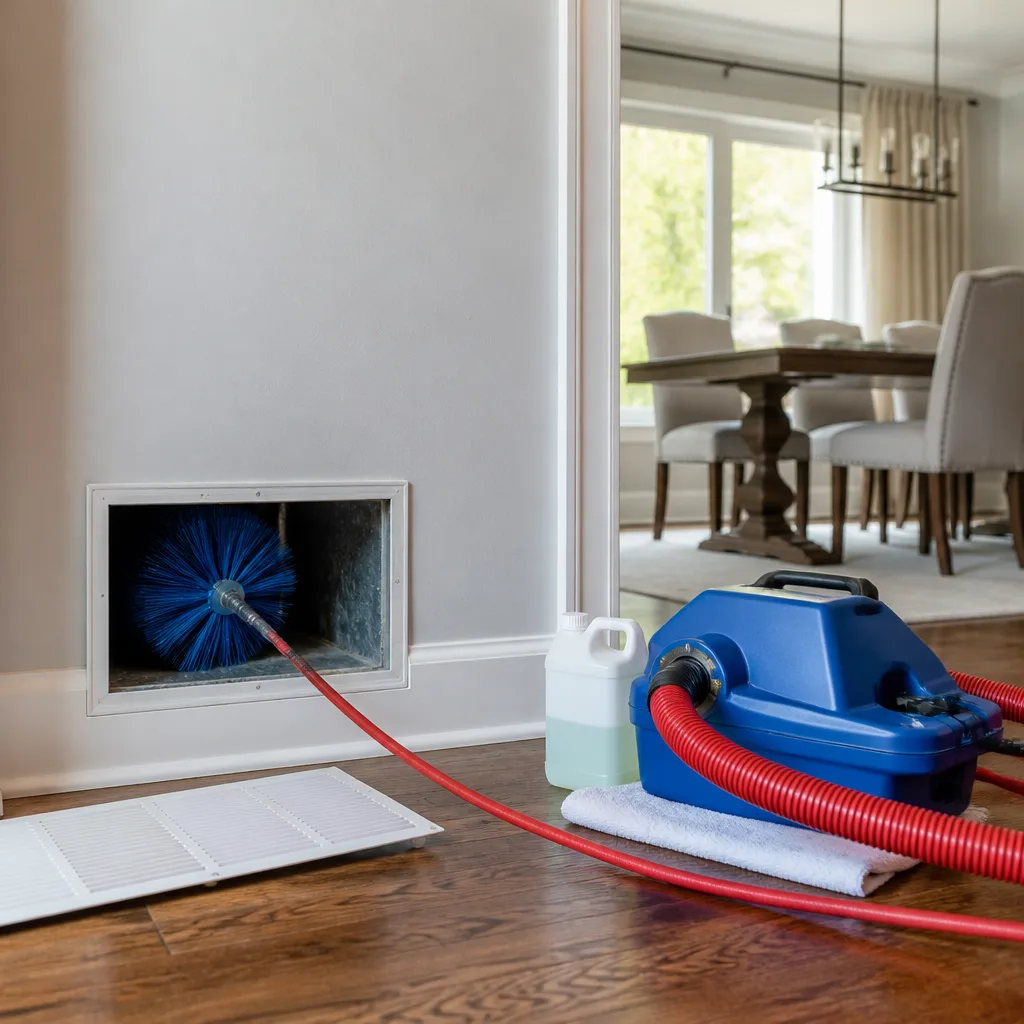 Sanitizing & deodorizing
Whole-system duct and dryer vent check with before-and-after photos - you see exactly what came out of your vents
That "$99 whole-house special" is a bait ad - the real number appears once they are in your hallway, or the "clean" is a shop-vac at the register. We photograph the inside of your ducts before and after instead.
DIY vs Professional Air Duct Cleaning: The Throggs Neck Homeowner’s Decision Guide
A consumer dryer-vent brush and a shop vac will clean about 8% of your duct system’s interior surface area. The other 92% is where the debris actually accumulates. That’s not a knock on homeowners who want to handle things themselves. It’s just how duct geometry works: the parts you can reach through a floor register aren’t the parts collecting years of dust, dander, and lint. This guide maps out exactly what a homeowner can legitimately do, what no consumer tool can reach, and how to decide which side of that line your Throggs Neck home sits on.
Quick Answer
DIY air duct cleaning is worth doing for register covers, the first few inches of each boot, and dryer vent lint near the dryer connection. It is not effective for the main trunk lines, plenum, or air handler coil, because removing debris from those areas requires negative-air pressure and mechanical agitation that no shop vac or consumer kit can generate. For most Throggs Neck homes with visible dust at the registers or a system that hasn’t been cleaned in years, professional source removal is the only method that actually clears the contamination rather than redistributing it.
Styles & brands we work with
- Whole-home duct cleaning
- Dryer vent cleaning
- Camera inspection
- Sanitizing & deodorizing
Table of Contents
- What Can You Actually Reach? A Register-by-Register Access Map
- The Equipment Gap: Why Negative-Air Pressure Is the Whole Job
- Where DIY Genuinely Works: Three Jobs Worth Doing Yourself
- The Risk Calculus for Older Throggs Neck Homes
- How to Run a DIY Pre-Inspection Before You Get a Quote
- What a Professional Cleaning Actually Involves, Step by Step
- The Cost Decision: When DIY Saves Money and When It Costs More
- Why Duct Cleaning Is Rarely the Only Thing Your System Needs
What Can You Actually Reach? A Register-by-Register Access Map
Before you buy any tool, understand the five zones of a residential duct system and what each one demands. Most homeowners imagine duct cleaning as one uniform task. It isn’t. The system is a chain of components with completely different access requirements, and your ability to clean each one yourself varies wildly.
1. Register covers and grilles. Fully accessible. Remove the screws, soak the covers in warm soapy water, scrub with a soft brush, dry them, and reinstall. This is legitimate DIY work and it does make a visible difference in a room. It also removes a layer of settled dust that would otherwise get pulled back into the airstream.
2. Register boots. The boot is the sheet-metal elbow that connects the grille to the branch duct. You can reach the first few inches of most boots with a vacuum hose and a brush, which is worth doing. Beyond that first bend, the boot narrows and turns, and a consumer hose can’t follow.
3. Branch runs. These are the individual ducts feeding each room. A consumer brush kit on a flexible rod can travel partway down a straight branch run. On any branch with an elbow or a flex-duct transition, the rod stalls and the brush stops contacting the duct wall. In practice, you’ll clean maybe half the length of the straightest branches and none of the rest.
4. Main trunk lines. This is where the bulk of the debris accumulates, because every branch dumps into the trunk and airflow slows there. Trunks are larger diameter, often run through wall chases and ceilings, and typically have only one or two access points in the entire house. Without cutting access panels, you can’t reach them. Without negative-air equipment, cleaning them is pointless even if you could.
5. Plenum and air handler coil. The plenum is the large box directly above the furnace or air handler. The coil sits inside the air handler and is the component most likely to be coated in a mat of dust and biological growth. Both require disassembly and, in the coil’s case, a coil-cleaning chemical and a method for capturing the runoff without soaking your equipment. This is not a homeowner task.
That’s the honest map. Two of the five zones are genuinely DIY-friendly. Three are not. The debris concentrated in zones three through five is the debris that matters for air quality and system efficiency.
The Equipment Gap: Why Negative-Air Pressure Is the Whole Job
Professional duct cleaning isn’t a stronger shop vac. It’s a different physical mechanism. Source removal works on a simple principle: create a pressure differential across the duct system, keep the system under continuous negative pressure, and agitate the duct walls so debris lifts into the airstream and gets captured at the source. The capture step is what separates a real cleaning from a dust storm in your living room.
That pressure differential is measured in cubic feet per minute, and it’s the heart of the job. A truck-mounted or high-capacity portable unit pulls somewhere in the range of a thousand to several thousand CFM through a sealed connection, usually at the plenum or a dedicated access port. A shop vac pulls a few hundred CFM at best, and only at the nozzle. The moment you insert a shop vac hose into a register, the vacuum loses almost all of its effective pressure because the duct is open at every other register in the house. You’re pulling room air, not duct debris.
Here’s what that means in practice:
- Containment. Negative pressure keeps loosened debris inside the duct while it’s being agitated. A shop vac at one register with the rest of the house open does the opposite: it stirs debris into the airstream and lets it settle back or spread into rooms.
- Agitation. Professional systems use air whips, rotary brushes, and forward-and-reverse air nozzles driven by compressed air. These scour the full circumference of a duct, including the bottom where debris collects. A consumer brush hits the sides and skips the bottom on any horizontal run.
- Access. Professional technicians cut and seal access ports at the plenum, trunk lines, and problem branches. Consumer kits only use existing registers, which is like trying to clean the inside of a chimney through the fireplace opening.
- Equipment grade. The systems we use, Rotobrush and Nikro among them, are built for continuous operation across a full house and for reaching through long runs. Abatement Technologies equipment adds containment-grade capability, which matters in homes where mold or allergen remediation is part of the picture.
None of this is a knock on a shop vac. A shop vac is excellent at the two zones a homeowner can actually reach. It just can’t do what a $20,000 source-removal system does, and the difference isn’t a matter of degree. It’s a different operation.
Where DIY Genuinely Works: Three Jobs Worth Doing Yourself
We’re not going to tell you that every duct-cleaning task requires a professional. Three jobs are worth doing on your own, and doing them well makes any professional visit more effective.
Job 1: Dryer vent cleaning near the dryer. This one matters for safety, not just efficiency. Lint is highly combustible, and the short section of venting you can reach behind the dryer is where lint accumulates fastest. Disconnect the flexible transition duct, vacuum it out, brush the rigid duct as far as your brush reaches, and re-secure the connection. Do this at least once a year. What you can’t reach is the run that travels through the wall to the exterior hood, and that run is where a clogged vent becomes a fire hazard. That’s the part professionals clear, and it’s why we treat dryer vent cleaning as a routine service rather than an add-on.
Job 2: Register cover maintenance. Remove, wash, dry, reinstall. Quarterly is a reasonable rhythm. If you have pets or a household member with allergies, monthly is better. This is the highest-return, lowest-effort task on the list.
Job 3: Pre-inspection documentation. Before you call anyone, gather real data. This is the single most useful DIY thing you can do, and we’ll walk through the method in full below. A homeowner who arrives at a quote conversation with photographs of what’s inside their registers gets a more accurate estimate and a clearer plan than one who just says “I think my ducts are dirty.”
Beyond these three, the honest answer is that consumer tools hit their limit fast. A homeowner with a shop vac and a register brush is doing real, useful maintenance. A homeowner trying to clean the trunk and plenum with the same tools is spending a weekend redistributing dust.
The Risk Calculus for Older Throggs Neck Homes
Throggs Neck has a lot of housing stock built in the mid-twentieth century, and that changes the risk calculation for DIY work. Older homes often have unsealed, poorly insulated duct systems running through unconditioned spaces like attics and crawlspaces, plus sheet-metal ductwork joined with tape or mastic that has dried and separated over decades. Those conditions create two problems for anyone cleaning ducts without proper containment.
The first is redistribution. When duct joints leak and you agitate the interior without negative pressure, loosened debris doesn’t just settle back in the ducts. It travels into wall cavities, attic insulation, and living spaces through every gap in the system. What was a localized problem becomes a whole-house problem. We’ve fielded plenty of calls from Throggs Neck homeowners trying to sort out a dust situation that got worse after a DIY attempt, and the fix is always more involved than the cleaning would have been in the first place.
The second is friable debris. In an older, unsealed system, dust and biological growth accumulate into mats that are loosely bound and easily disturbed. Mold spores, in particular, are the concern. Disturbing a moldy surface without containment releases spores into the airstream. That’s the exact mechanism professional cleaning is designed to prevent, and it’s why abatement-grade methodology exists. Our equipment lineup includes Abatement Technologies systems specifically because some Throggs Neck homes are remediation-adjacent, not routine cleaning. If there’s visible growth or a persistent musty odor at the registers, DIY is the wrong call.
What to watch for before you decide:
- Visible growth or dark staining at or near any register opening. Stop. Call a professional.
- Musty, earthy smells that appear only when the system runs. This suggests growth inside the duct or on the coil.
- Loose or separated duct joints visible in the attic, basement, or behind access panels. Cleaning without resealing these makes the problem worse, not better.
- Water staining near the air handler. Moisture plus dust equals growth. This is a repair-and-clean situation, not a cleaning situation.
- A recent renovation or pest issue. Drywall dust and rodent activity both leave material in ducts that needs source removal with containment, not a shop vac.
If you can check any of these, the calculus tilts hard toward professional work. If none apply and your system is moderate, the DIY jobs above are worth doing.
How to Run a DIY Pre-Inspection Before You Get a Quote
A useful pre-inspection turns a vague concern into documented evidence. You don’t need special tools. A flashlight, a phone camera, and a notepad will do.
Step 1: Photograph every register opening. Remove the grille cover, shine the light down the boot, and take a photo. Get the camera as close to the opening as you can, and shoot straight down the boot rather than at an angle. Repeat for every register in the house.
Step 2: Note the color and texture of the debris. Grey-brown fluff is dust and lint. Dark, sticky, or stained material is a different story. Sandy grit near floor registers often means a leak nearby. Record what you see for each register rather than assuming they’re all the same, because they rarely are.
Step 3: Check the air handler and plenum. Open the access panel on your air handler (safe: it’s low-voltage) and photograph the coil and the interior of the plenum. If the coil looks like a grey mat, note it. Don’t attempt to clean it.
Step 4: Note the filter condition and type. A high-MERV filter that’s never been changed tells a technician a lot about a system’s history. So does a cheap fiberglass filter that’s been in place for a year. If you have a premium IAQ system from Aprilaire or Honeywell, photograph it: those systems need to be cleaned around with care, not bypassed.
Step 5: List rooms with symptoms. Which rooms are dustiest? Which smell musty? Where are the allergy complaints worst? The pattern of symptoms is often the most useful diagnostic you can hand a technician.
Step 6: Write down the system age and any recent changes. New roof, new furnace, recent renovation – all of it matters. If you don’t know, say so.
Armed with these notes and photos, you’ll walk into any quote conversation with real ground. A professional will respect the work, and you’ll be able to tell whether the quote matches what you’re seeing. For more on what a professional will actually do with that information, see our
air duct cleaning page, which walks through the cleaning process in detail.
What a Professional Cleaning Actually Involves, Step by Step
Knowing the professional process helps you decide whether it’s worth paying for, and helps you evaluate any quote you receive. Here’s the standard sequence for a thorough residential cleaning in Throggs Neck.
- Walkthrough and system assessment. The technician identifies the system type, locates access points, checks for damage, and documents conditions with photos before starting. A reputable contractor will show you the photos of your own ducts.
- Containment setup. Registers are sealed or covered, and a negative-air connection is established at the plenum or a dedicated access port. This is the point where a professional job becomes fundamentally different from anything a homeowner can do.
- Agitation. The technician runs air whips, rotary brushes, and air nozzles through each branch, trunk, and the plenum, working systematically. Debris lifts off the duct wall and gets captured by the negative-air system.
- Coil and air handler cleaning. The evaporator coil is cleaned using a coil-safe chemical and clean water, with the runoff captured. This step is often skipped by low-cost providers, and it’s the one that most affects system efficiency and air quality.
- Sanitizing. Where the system shows signs of biological growth or persistent odor, a sanitizing treatment is applied after cleaning. Our Air Quality & Sanitizing service covers this and allergen-specific treatment for homeowners who need it.
- Sealing and repair. Leaky joints, disconnected runs, and sagging flex duct get addressed. Cleaning without sealing is temporary. Our Duct Repair & Sealing work exists because a clean system that still leaks pulls attic dust back into the airstream.
- Verification. Before-and-after photos are taken and shown to you. A professional will not hand you a bill without letting you see the result inside the ducts.
This sequence is what separates a true source-removal job from a coupon-price vacuum run. The equipment matters: Rotobrush and Nikro are contractor-grade systems built for this process, not consumer gear with a longer hose. The containment methodology matters. And the full-system view matters, which is why we treat the whole thing as an interconnected job rather than selling a duct cleaning and then upselling the coil and sealing separately. Our HVAC cleaning page goes deeper into how the coil and blower assembly fit into the picture.
The Cost Decision: When DIY Saves Money and When It Costs More
Here’s the honest math. Register cover maintenance and dryer vent work are essentially free or near-free, and worth doing yourself. A full professional cleaning is a scheduled, equipment-intensive job with a real cost. The question is where the crossover point sits for your specific home.
Rough ranges for a typical residential cleaning in the Throggs Neck area, based on system size and condition:
- Routine whole-house cleaning, accessible system: the low end of the range, appropriate when ducts are serviced on a regular cadence and no coil or mold work is needed.
- First cleaning after many years, plus a clogged trunk: higher, because of the time required to break up compacted debris.
- Cleaning with coil service and sanitizing: higher again, because coil work and sanitizing are separate procedures with different chemicals and hours.
- Cleaning plus repair and sealing: depends on the number of leaks and the extent of the repair work. On older Throggs Neck homes, this is often the most valuable line item.
We quote by written estimate because the range is real: a two-story colonial with ten registers is not the same job as an apartment with four. We don’t publish a flat price, and we don’t quote per-vent, because per-vent pricing is the mechanism behind the bait-and-switch complaints you’ll find in any online review for this industry. One price per system, agreed before the work starts, documented in writing. If a quote you receive is dramatically lower than others, the question to ask isn’t why the other quotes are high. It’s which steps the low quote is leaving out. Coil cleaning, sealing, and verification are the three most common omissions.
And regarding DIY cost: a shop vac, a register brush kit, and a flexible duct brush cost money too. Homeowners often buy the kit, spend a Saturday, and then call a professional anyway because the debris they could reach was never the problem. That’s the case where DIY costs more than it saves. A professional quote, by contrast, tells you exactly what a full-system job would involve and lets you decide where the line falls for you.
Why Duct Cleaning Is Rarely the Only Thing Your System Needs
Once you understand the duct system as a single connected assembly, the real value of a professional visit becomes clearer. It’s not just that they clean the parts you can’t reach. It’s that a good provider sees and addresses the whole chain at once, and that’s where the durability of the result comes from.
The five categories of work that make a system genuinely clean and stay clean:
- Air duct cleaning. Source removal of debris from trunks, branches, boots, and the plenum. The core service.
- Dryer vent cleaning. A separate lint run with a separate safety rationale. Skipped by duct-only specialists and frequently the most important call a homeowner makes.
- HVAC cleaning. Coil, blower, and heat exchanger surface cleaning. This is where airflow and efficiency are recovered.
- Duct repair and sealing. Fixes the leaks that let contaminated air in after cleaning. Without this, a clean system re-dirties itself.
- Air quality and sanitizing. Post-cleaning treatment for growth, odors, and allergen concerns.
A specialty duct-cleaning provider with all five in-house is a different animal from one that does only one and refers out or subcontracts the rest. If you’re deciding between providers, the question to ask is which of these five they perform themselves and how they document each one. See our full range of services at Air Duct Cleaning Throggs Neck.
Common Mistakes to Avoid
- Assuming a shop vac can do a real duct cleaning. It can’t reach the trunk, plenum, or coil, and it doesn’t create negative pressure. A shop vac at a register is dust relocation, not removal. In a Throggs Neck home with older ducts, it’s often the mistake that makes the situation worse.
- Buying a flexible brush kit and expecting it to reach the trunk. Consumer brush kits stall at every elbow and skip the bottom of any horizontal run. They’re useful for the first few feet of a boot and not much else.
- Hiring the lowest coupon quote and expecting a complete job. Low quotes usually skip the coil, skip containment, skip sealing, and skip verification photos. The price is low because the job is partial.
- Cleaning ducts without fixing leaks. Cleaning a leaky system without sealing it means the ducts will pull attic or crawlspace dust back in within a season. On older Throggs Neck homes, sealing is often more valuable than the cleaning itself.
- Skipping the air handler coil. A clean duct system feeding a matted coil still circulates dust and dander. Coil cleaning is where efficiency and air quality actually get recovered.
- Forgetting the dryer vent entirely. Dryer vent cleaning is a fire-safety service, not a convenience one. It gets overlooked because it’s in a separate part of the house from the HVAC system.
- Cleaning too often or too rarely. Annual cleaning is overkill for most homes. Waiting ten years is a long time for a system that’s pulled hundreds of cubic feet of air per minute through it. Every three to five years, adjusted for pets, renovations, and allergies, is a reasonable rhythm.
See the difference
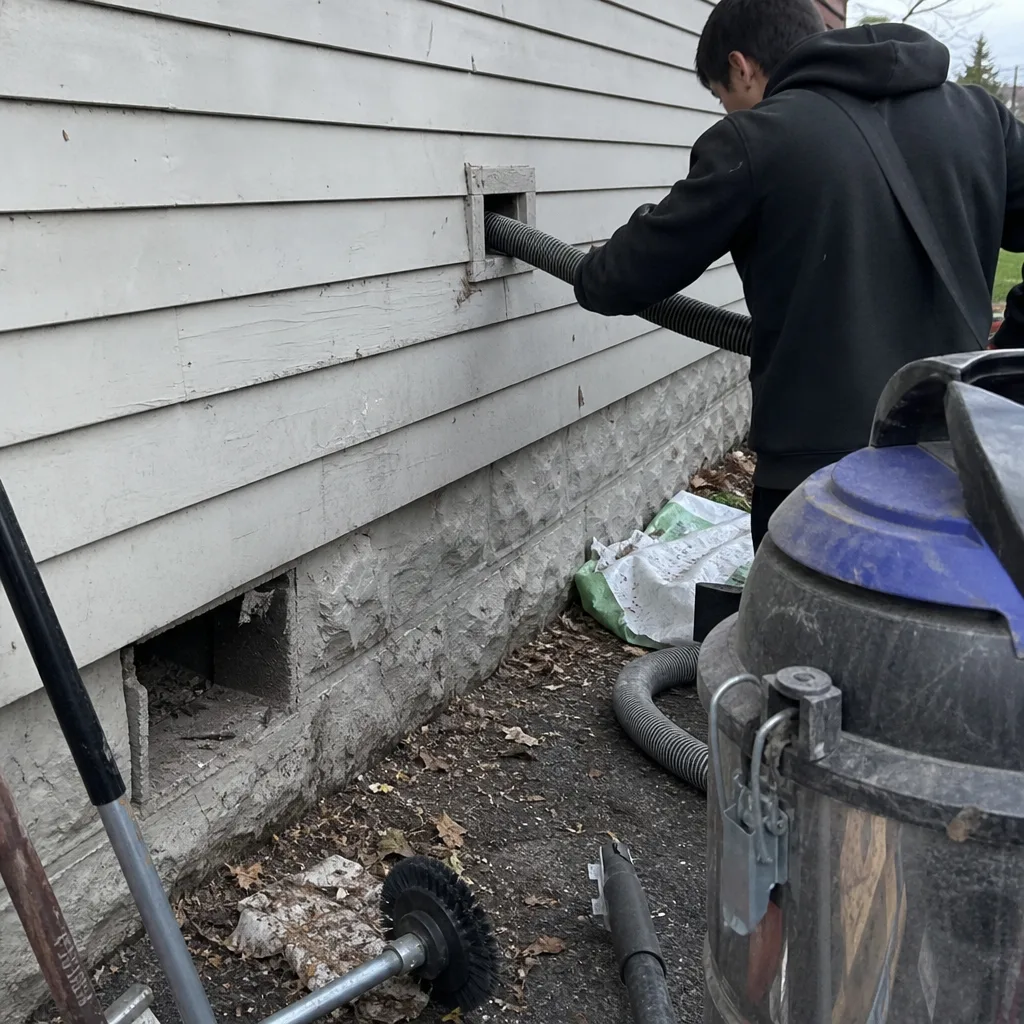 Before
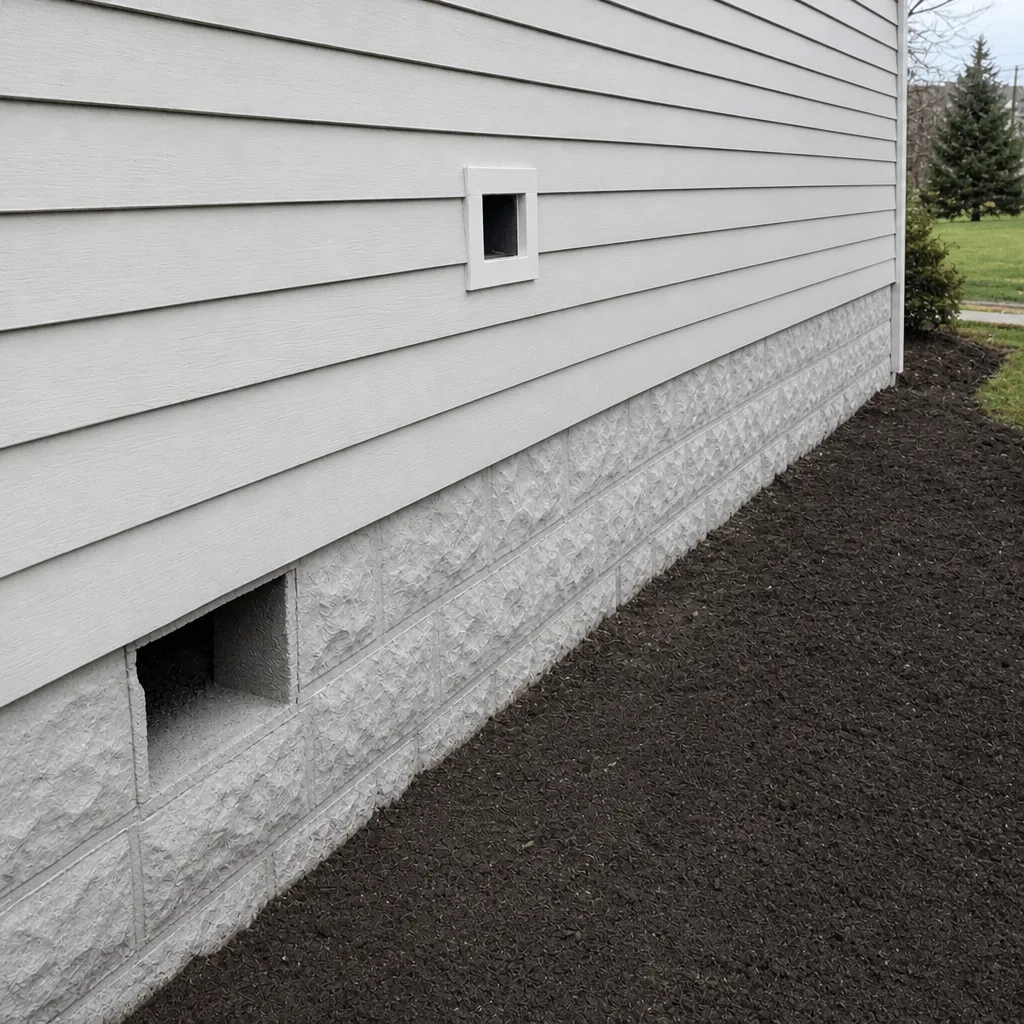 After
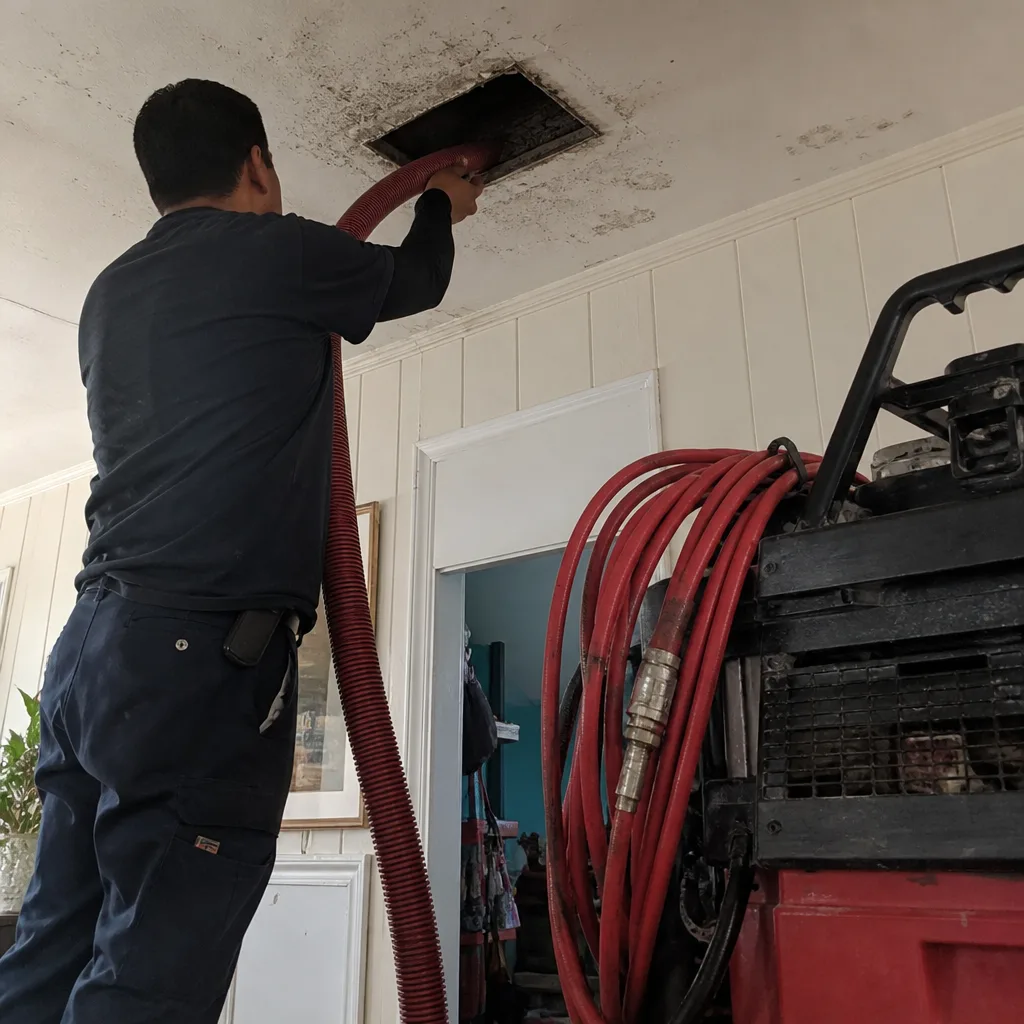 Before
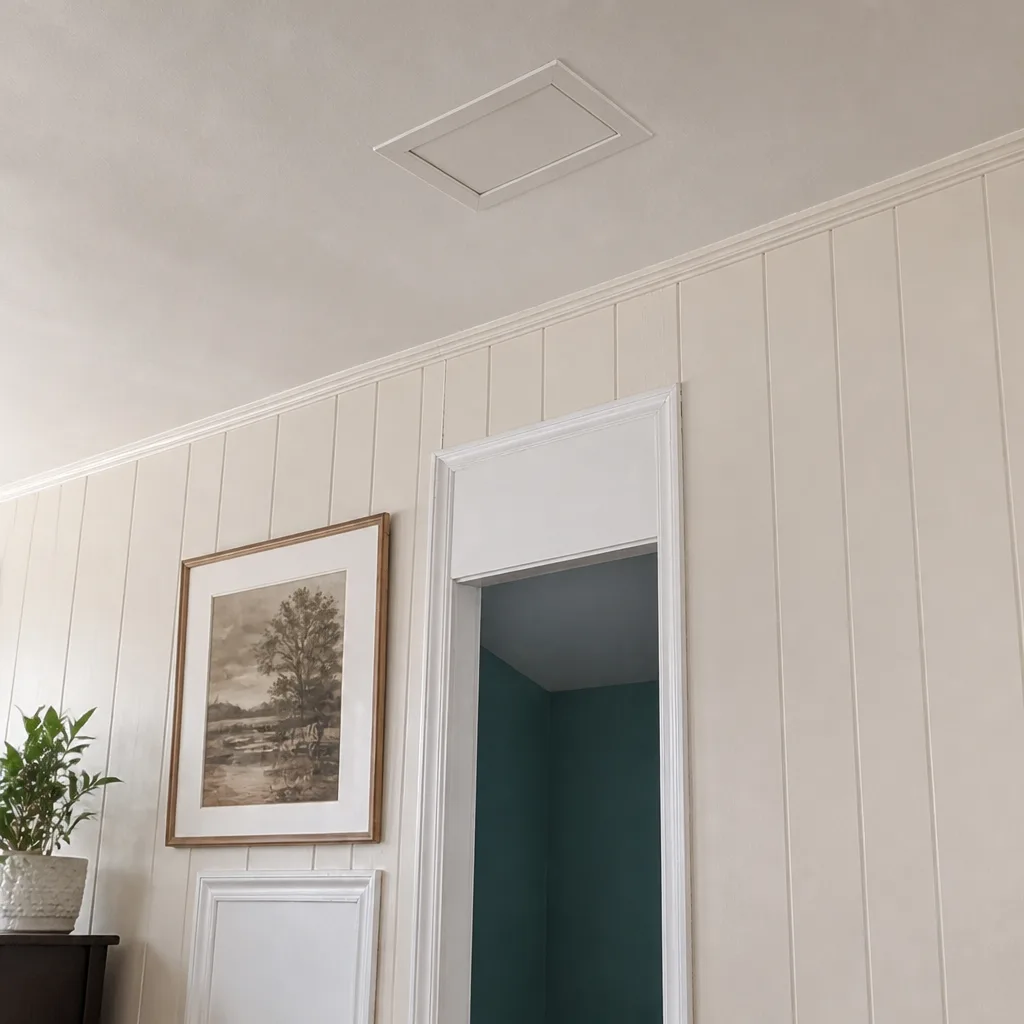 After
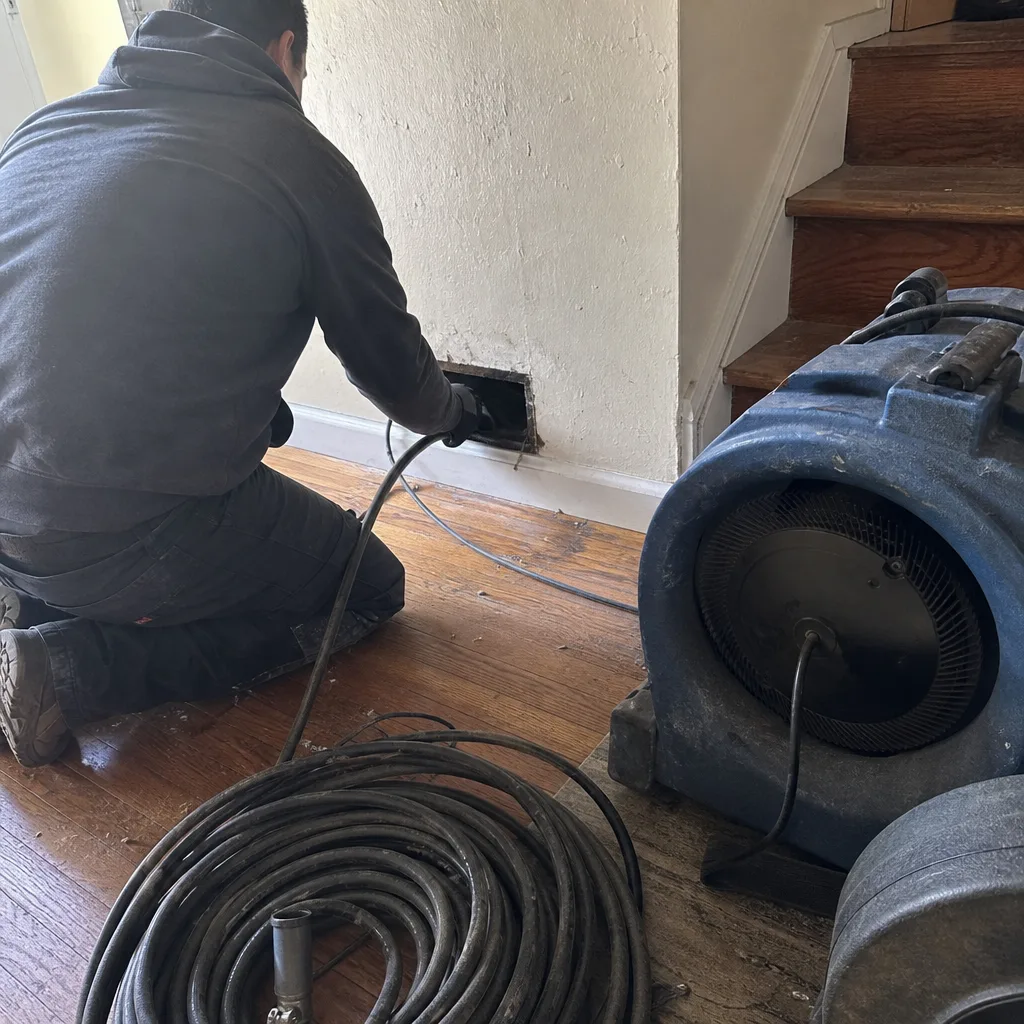 Before
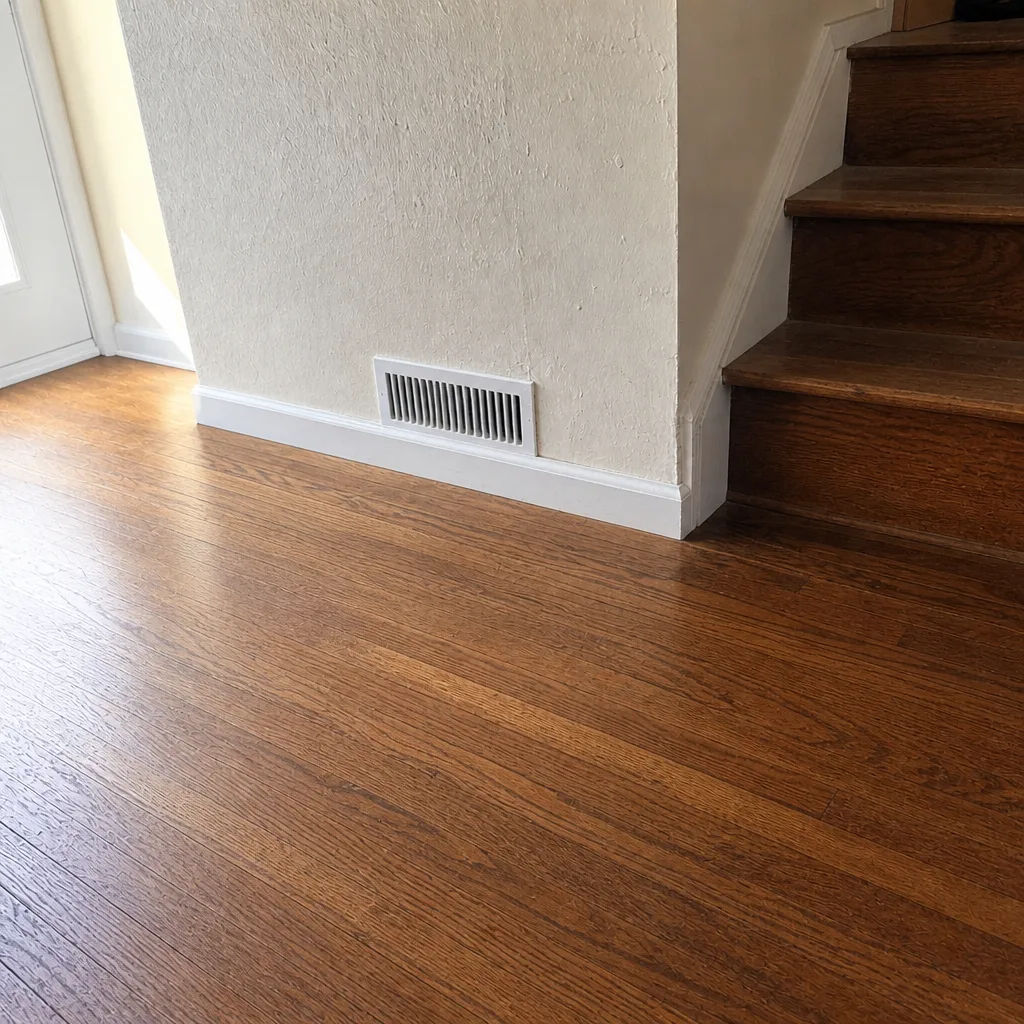 After
When to Call a Professional
Call a professional if any of the following apply: visible growth or staining at any register, musty odor when the system runs, a system that hasn’t been cleaned in five years or more, recent renovation work or pest activity, moisture or water damage near the air handler, or a dryer vent that takes longer than one cycle to dry a load of laundry. Call even sooner if you’ve attempted DIY cleaning and the dust in your home has increased rather than decreased.
Air Duct Cleaning Throggs Neck offers free estimates in Throggs Neck. Call (866) 558-4773. We answer 24/7. Fast dispatch from 7am to 7pm, Sunday through Friday. Our technicians have up to 9 years of experience and use Rotobrush and Nikro systems along with Abatement Technologies containment equipment. One flat price per system, agreed before work starts, with before-and-after photos so you can see exactly what was done.
Frequently Asked Questions
You can clean register covers and the first few inches of each boot with a shop vac, and that’s worth doing. You cannot effectively clean the trunk lines, plenum, or air handler coil, because those require negative-air pressure and mechanical agitation beyond what any consumer vacuum generates. For most Throggs Neck homes, the visible dust you’re trying to fix lives in the parts a shop vac can’t reach. Call (866) 558-4773 for a free estimate if you want a professional assessment of what your system actually needs.
Cost is set per system and depends on size, condition, and whether coil cleaning, sanitizing, or duct sealing are part of the job. We don’t quote per-vent and we don’t publish a coupon figure, because the honest range is too wide for one number. The written estimate is the price, agreed before work starts. Call (866) 558-4773 for a free estimate.
Low quotes typically skip coil cleaning, skip containment and source-removal equipment, skip duct sealing, and skip before-and-after verification. What you’re paying for with a reputable provider is the equipment, the time, and the parts of the job most companies leave out. Ask every contractor what steps their quote includes, and compare like for like. Call (866) 558-4773 for a quote that itemizes the full job.
Ask for before-and-after photos of your own ducts, taken at the same access points, and ask the technician to walk you through the coil and plenum condition. Any provider that won’t show you the interior of your own system before and after is a provider you shouldn’t hire. We take photos as a standard part of every job. Call (866) 558-4773 to schedule.
Every three to five years is a reasonable rhythm for most Throggs Neck homes, adjusted for pets, allergy sufferers, renovations, and recent pest activity. Homes with significant dust problems, older unsealed systems, or visible growth at the registers may need it more often. Dryer vent cleaning is a separate annual service. Call (866) 558-4773 to talk through a schedule that fits your home.
Usually yes, and often for a different reason than in newer homes. Older systems leak, and cleaning without sealing means the ducts pull contaminated air from attics and wall cavities back into the airstream. The valuable combination in older Throggs Neck homes is cleaning plus duct repair and sealing, which addresses the root cause rather than just the surface. Call (866) 558-4773 to schedule an assessment.
The Bottom Line
DIY air duct cleaning is worth doing where it works: register covers, boots, dryer vent transition sections, and the pre-inspection photographs you carry into a quote conversation. It is not a substitute for professional source removal of the trunk lines, plenum, and coil, because those parts of the system require negative-air pressure and contractor-grade agitation that no consumer tool generates. In older Throggs Neck homes with unsealed ductwork, DIY attempts can redistribute contamination rather than remove it. The right call depends on what you find when you look inside your registers. If it’s dust and lint in the first few inches, do the maintenance. If it’s growth, staining, musty odor, or visible debris deeper in the run, get a professional assessment and a written estimate that covers the full system.
Call (866) 558-4773 for a free estimate. We answer 24/7. Fast dispatch from 7am to 7pm, Sunday through Friday. One flat price per system, agreed before work starts, with before-and-after photos of your own ducts. The local pro we connect you with is licensed and insured as their state requires.
Written by the team at Air Duct Cleaning Throggs Neck.