
Last updated November 25, 2026
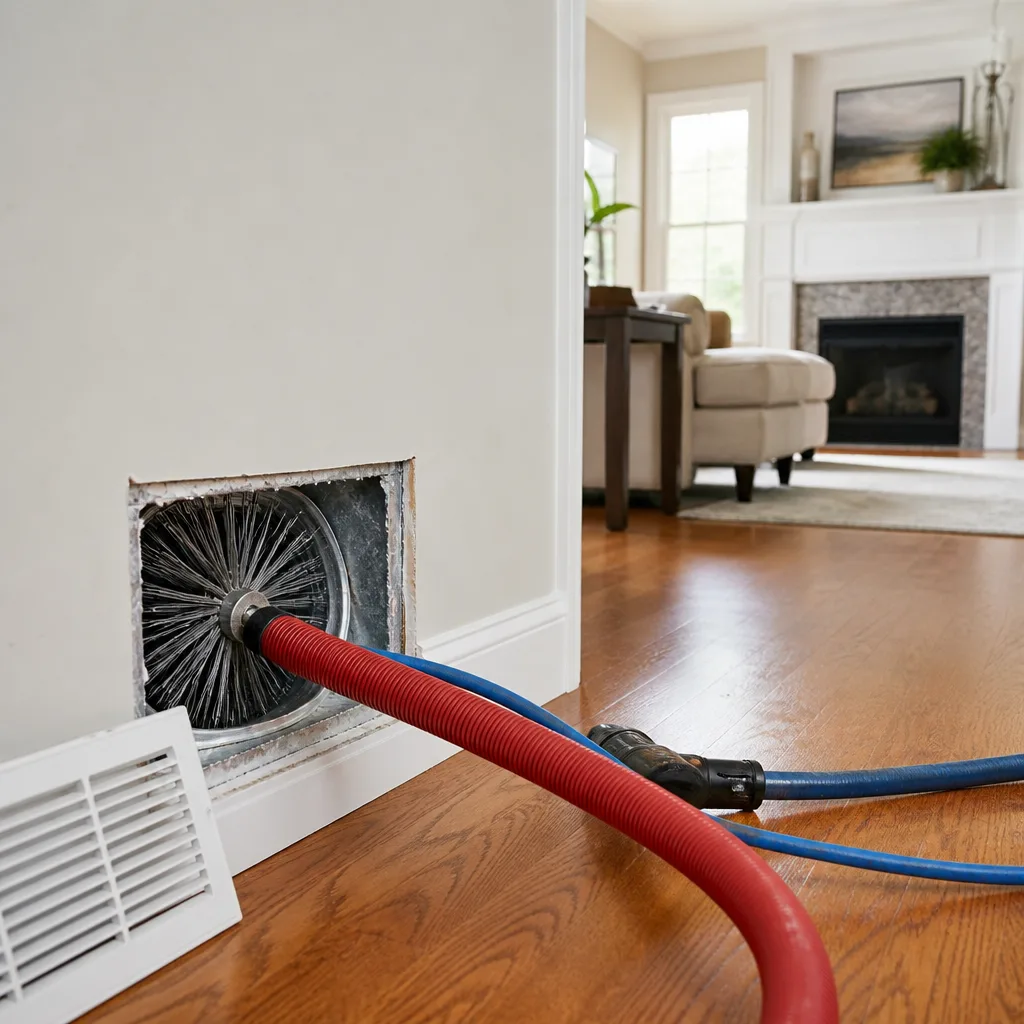 Whole-home duct cleaning
 Dryer vent cleaning
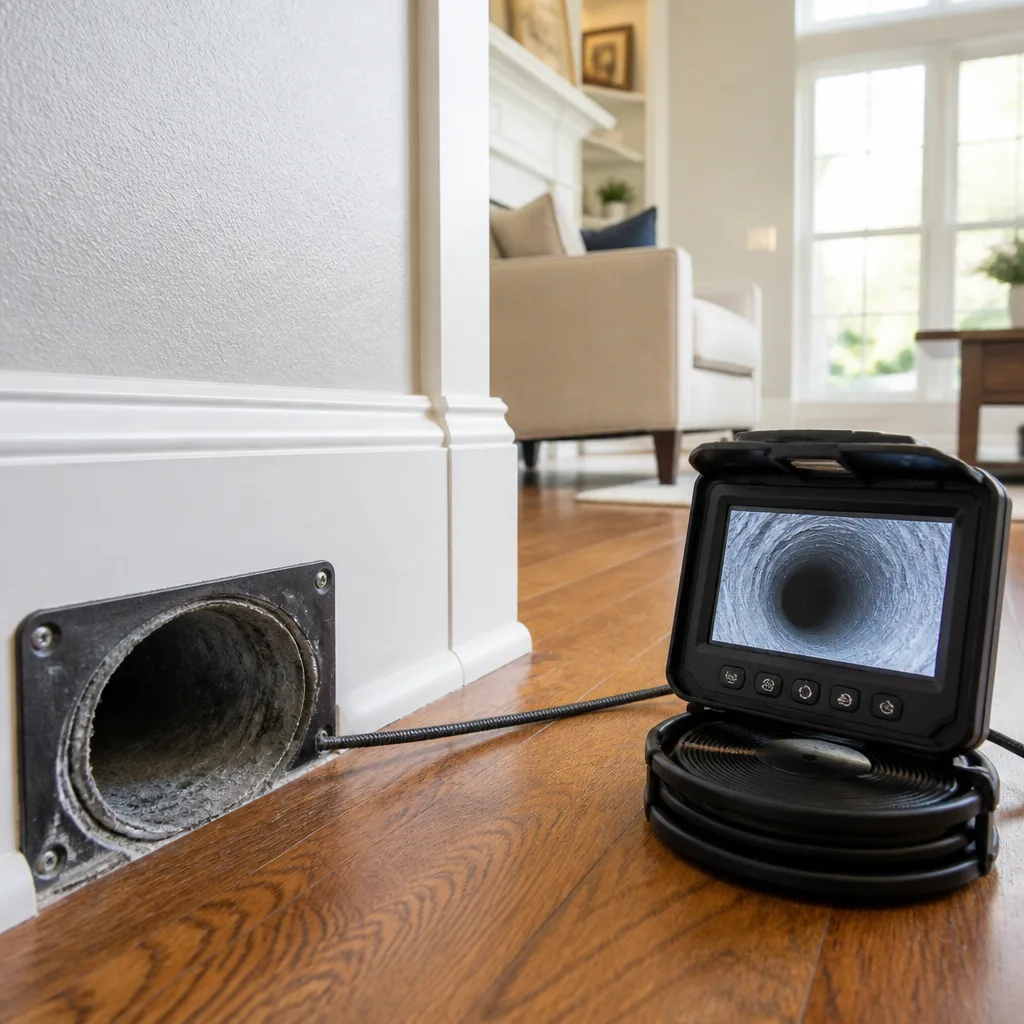 Camera inspection
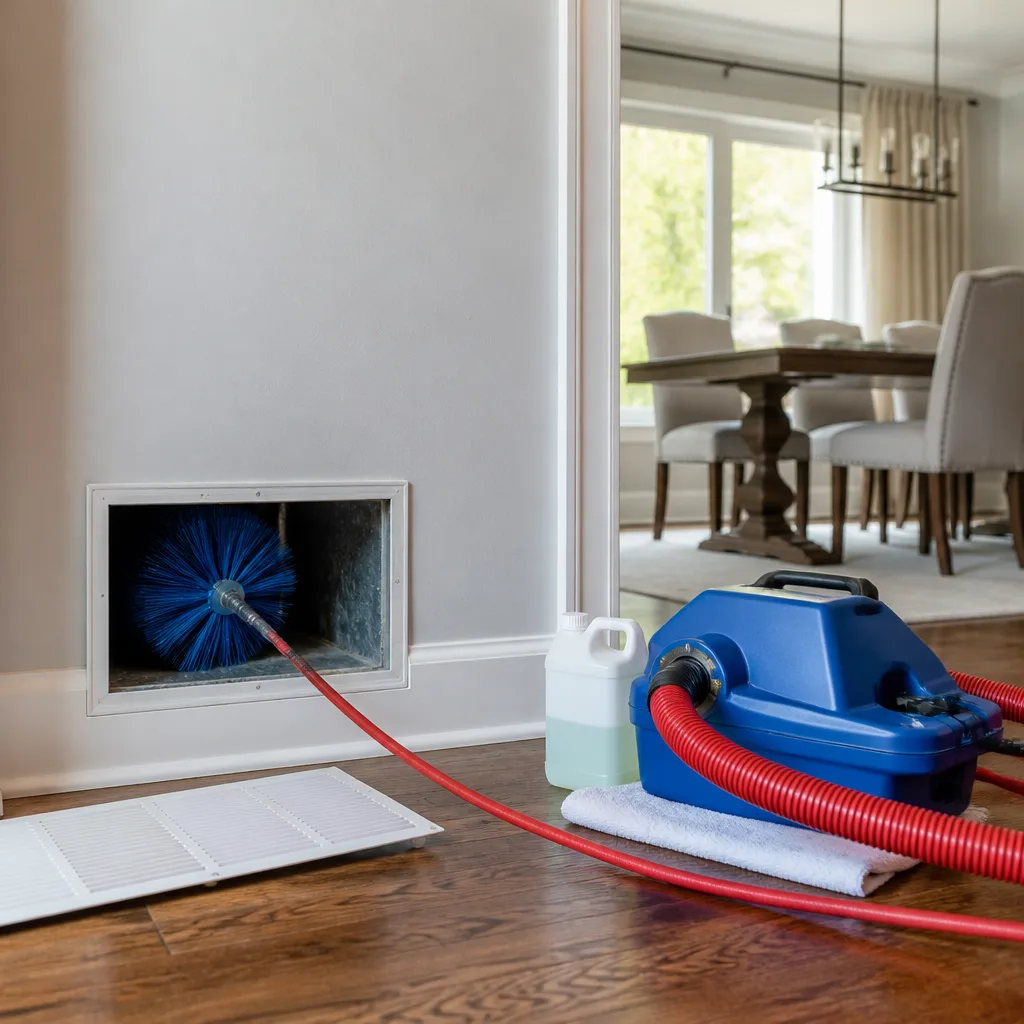 Sanitizing & deodorizing
Whole-system duct and dryer vent check with before-and-after photos - you see exactly what came out of your vents
That "$99 whole-house special" is a bait ad - the real number appears once they are in your hallway, or the "clean" is a shop-vac at the register. We photograph the inside of your ducts before and after instead.
Air Duct Cleaning Warning Signs: A Throggs Neck Homeowner’s Reference Guide
If your allergies are worst in the first 15 minutes after the heat or AC kicks on, then improve once you leave the room, the problem isn’t outdoor air. It’s what your ducts are launching into the room every time the blower starts. Most homeowners wait until the problem is visible or medically obvious, and by then contamination has been cycling through the HVAC system for months. This reference guide is built to change that timing. It teaches you to read the earlier, subtler signals in a Throggs Neck home: what your nose, your registers, your energy bills, and your body are telling you long before the problem becomes undeniable.
Quick Answer
The clearest warning signs that your air ducts need professional attention are symptoms that worsen indoors and ease outdoors, gray dust halos or black streaks around supply registers, a musty or stale smell that returns every time the system runs, rising energy bills with no change in usage, and uneven heating or cooling between rooms. Any one of these is worth investigating. Two or more appearing together usually means contamination, airflow restriction, or moisture infiltration has been building inside the duct system for a while.
Styles & brands we work with
- Whole-home duct cleaning
- Dryer vent cleaning
- Camera inspection
- Sanitizing & deodorizing
Table of Contents
- What Your Nose Tells You: Reading Duct Odors Correctly
- What Register Discoloration Patterns Actually Mean
- Airflow Signals: Energy Bills, Uneven Rooms, and Short-Cycling
- Health Patterns That Point Indoors, Not Outdoors
- Pest Evidence in Ductwork: How to Assess Safely
- Why Older and Multi-Unit Throggs Neck Housing Shows These Signs First
- What Professional Duct Cleaning Actually Involves
- Where Cleaning Stops and Repair Begins
What Your Nose Tells You: Reading Duct Odors Correctly
Odor is the most useful and most misread diagnostic signal a homeowner has. People tend to lump every smell into “the house smells off,” but the character of the odor narrows the cause considerably. Before you call anyone, spend a few minutes at a few registers while the system is running and name what you actually smell.
Musty
A musty, damp-earth smell points toward moisture and biological growth. In duct systems, that usually means condensation, a leak, or a section of ductwork that stays cool and wet enough to support mold spores. This is the odor most directly connected to indoor air quality, and it’s the one that tends to return quickly if only the visible surfaces are cleaned. Professional cleaning with containment-grade equipment matters here, and so does finding the moisture source. If the smell comes back within weeks of a cleaning, the water problem underneath it wasn’t addressed.
Acrid
An acrid, sharp, or burning-plastic smell is in a different category entirely. It usually points to an electrical component, a failing blower motor, or a heat exchanger issue rather than contamination. This is not a cleaning problem, and you shouldn’t treat it as one. Turn the system off and have an HVAC technician inspect it. A heat exchanger concern in particular is a safety matter, and it deserves a trained professional’s eyes rather than a homeowner’s guesswork.
Stale
A flat, stale, “old basement” smell is the most common duct odor and usually the mildest. It typically comes from accumulated biological debris, dust, dander, and lint that have settled in the ductwork and get stirred up every time air moves. It’s rarely urgent, but it’s a reliable early signal that the system is overdue for a look.
How to describe it when you call
- Note when you smell it: only at startup, continuously, or intermittently.
- Note where: one room, one floor, or the whole house.
- Note the character: musty, acrid, or stale.
- Note whether it predates or follows a rainy stretch or a change in season.
That short description helps a specialist route the call to the right service, whether that’s air duct cleaning, HVAC inspection, or a moisture investigation.
What Register Discoloration Patterns Actually Mean
Register surfaces are where duct problems become visible before they become obvious. Two patterns matter, and they don’t mean the same thing.
Gray dust halos
A soft gray ring or halo around the edges of a supply register usually points toward filter bypass or a poorly sealed register connection. Air is escaping around the frame instead of passing cleanly through the filter and into the room, and it carries dust with it. Over time that dust deposits at the exact point where the air leaks out. If you see even halos on most registers, the filter is likely undersized for the system, installed to a loose fit, or bypassing because the frame isn’t sealed properly.
Black streaks
Black streaks, smudges, or a sooty appearance around a register suggest moisture infiltration or a localized airflow issue rather than simple dust. Streaking happens where air moves faster than it should through a gap, and the darkness often comes from moisture interacting with dust rather than dust alone. If streaks are concentrated on one register while others look clean, that register is worth inspecting first. In our experience, a single black-streaked register is often the tip of a section of ductwork that has a leak or is pulling in unfiltered air from a crawl space or attic.
What to check before calling
- Look at every supply register on each floor, not just the ones you use most.
- Look at the return registers too; a dirty return can look clean on the supply side.
- Check whether the pattern is even across the house or concentrated in one area.
- Check the filter: a filter installed backward or one that’s too restrictive can create the same halos.
If you’re seeing patterns at three or more registers, cleaning and sealing together tend to solve more than cleaning alone.
Airflow Signals: Energy Bills, Uneven Rooms, and Short-Cycling
Duct problems show up in the operating behavior of your HVAC system long before they show up in your air quality. Three signals are worth tracking.
Rising energy bills with no usage change
If your bill has climbed over a season or two and nothing in the house has changed, look at airflow before you look at the equipment. Restricted ductwork forces the blower to work harder and longer to move the same volume of air, and that shows up as higher operating cost. A dirty filter is the first thing to rule out; contamination inside the ducts themselves is the next.
Uneven heating and cooling
Rooms that run hot in summer and cold in winter, while other rooms feel fine, are usually a duct distribution problem rather than a thermostat problem. Contamination, partial blockages, or disconnected ducts reduce airflow to specific branches. In Throggs Neck homes with finished upper floors or converted attic spaces, the top floor often shows the airflow problem first because it’s at the end of the longest duct run.
Short-cycling
A system that starts and stops frequently without reaching the set temperature is straining against something. Airflow restriction is a common cause, and it’s worth checking the obvious first: filters changed, registers open, no furniture blocking returns. If those check out and short-cycling continues, have an HVAC specialist look at the duct system and the equipment together rather than guessing at either one.
What to track
- Two to three months of energy bills compared to the same period last year.
- Which rooms feel comfortable and which don’t, on both floors.
- How long the system runs before it cycles off.
If two or more of these signals line up, it’s worth scheduling a look at the full system.
Health Patterns That Point Indoors, Not Outdoors
The strongest single clue that a duct problem is affecting you is a symptom pattern that worsens indoors and improves outdoors. That contradicts what most people assume about allergies and is the pattern our technicians ask about first.
The 15-minute pattern
Pay attention to what happens in the first 15 minutes after the heat or AC kicks on. If symptoms spike in that window and settle when you leave the room or leave the house, the system is the source. The blower stirs up dust and settled particles with the first blast of air, and they dissipate once the room is left behind.
Winter is the tell in Throggs Neck
In older and multi-unit Throggs Neck housing, symptoms often sharpen in winter when windows stay closed and the same indoor air keeps recirculating. A winter spike that clears in spring suggests indoor air quality is the driver, not pollen or seasonal outdoor allergens.
Patterns to write down
- Time of day the symptoms start, especially at system startup.
- Whether symptoms improve within minutes of leaving the house.
- Which rooms are worst; bedrooms are usually the most sensitive tell.
- Whether the pattern is stronger in winter than summer.
See a doctor about symptoms that persist. When symptoms consistently point indoors, a duct and air quality specialist can inspect the system and let you know whether contamination is a likely contributor.
Pest Evidence in Ductwork: How to Assess Safely
Pest activity in ducts is more common than most homeowners expect, especially in older buildings with open attic or crawl-space connections. It’s also the one area where the order of the call matters: a pest control company and a duct cleaning specialist are both involved, but you usually want the infestation handled first.
Signs to look for
- Scurrying or scratching sounds from inside walls or duct openings, especially at quiet times.
- Small debris, droppings, or nesting material visible in or near registers.
- A droppings or nesting smell that’s separate from a musty smell.
- Insects or their evidence at multiple registers in the same area.
What to do, and what not to do
- Don’t remove register covers and reach in to investigate. Contaminated debris and sharp duct edges make this more dangerous than it looks.
- Photograph what’s visible at the register without touching it.
- Call a pest control company first if you see or hear active pests. They’ll handle the infestation and confirm when it’s cleared.
- Schedule duct cleaning and sanitizing after the pest issue is resolved, so residues and debris are removed rather than stirred around.
Once pests are cleared, a sanitizing treatment after cleaning helps address the residue they leave behind.
Why Older and Multi-Unit Throggs Neck Housing Shows These Signs First
Not every home shows duct problems at the same rate. Two housing types in Throggs Neck tend to show them earlier: older single-family homes with legacy duct layouts, and multi-unit buildings where ductwork is often shared or runs through unconditioned spaces. Both make contamination easier to accumulate and harder to notice.
Legacy duct layouts
Older homes often have duct runs that were installed to a different standard than today’s equipment. Original sheet-metal ductwork may have gaps, unsealed joints, and runs through spaces that were never intended to be conditioned. Those gaps pull in unfiltered air from attics, basements, and crawl spaces, so the system spreads dust and moisture from places you don’t want it going.
Multi-unit shared systems
In multi-unit buildings, duct problems often show up as uneven airflow across units or a smell that one unit reports and others don’t. Where ductwork runs through shared spaces, sealing and repair become more important than cleaning alone, and the job has to be scoped carefully to avoid spreading contamination from one unit to another.
The Throggs Neck combination
The neighborhood’s mix of older houses and tightly built multi-unit housing means the same problem shows up in different ways depending on the building. A register halo in one house is a filter bypass; a register halo in a multi-unit building might be a shared duct issue affecting several residents. Either way, the earlier you catch the pattern, the simpler the fix.
What Professional Duct Cleaning Actually Involves
Understanding what a proper cleaning looks like helps you read warning signs and judge whether a quote makes sense. Real duct cleaning isn’t a shop vac and a hose. It’s professional-grade equipment, a full assessment of the system, and containment so contamination doesn’t spread around the house.
The equipment and the process
Professional duct cleaning uses high-powered vacuum and agitation equipment, and the serious contractors use systems built for it. We run Rotobrush and Nikro equipment, which are industry-standard systems for residential duct work, along with Abatement Technologies equipment where containment matters. In HVAC cleaning, familiarity with Honeywell and Aprilaire controls and IAQ components matters too, because the cleaning has to work around systems that are already installed and running.
What a typical job looks like
- Inspection of the full duct system, including returns, before any cleaning starts.
- Containment setup and sealing of registers where appropriate.
- Mechanical agitation of duct surfaces with brushes and air tools.
- High-power vacuum to capture and remove the loosened debris.
- Cleaning of the air handler, coil, and accessible HVAC components.
- Optional sanitizing treatment to address residue on duct surfaces.
Where ducts are damaged or leaking, HVAC cleaning is only part of the answer. Repair and sealing are what keep the system from pulling in unfiltered air again.
Where Cleaning Stops and Repair Begins
Cleaning removes what’s inside the ducts. Repair and sealing fix what lets contamination in. In practice, the two jobs are linked, and skipping the repair is why some homes feel the same a few months after a cleaning.
Signs repair may be needed
- Register discoloration that returns after cleaning.
- Visible gaps at joints or at the connection points where ducts meet registers.
- Ductwork that runs through an unconditioned attic or crawl space without insulation.
- Streaking at a single register that suggests a localized leak.
Why this matters in Throggs Neck
In a neighborhood with older housing stock and tight multi-unit buildings, sealing gaps and fixing damage stops the cycle at the source. Cleaning without sealing leaves the same contamination pathway open, and you’ll be back where you started. A full-system approach that combines cleaning with repair and sealing is what produces results that last.
Common Mistakes to Avoid
- Waiting for a visible mess. By the time you can see contamination at a register, it’s often been cycling through the system for months. Watch for the earlier signals instead.
- Assuming it’s an outdoor allergy. Symptoms that improve when you leave the house point indoors, not outdoors. Track the 15-minute pattern before blaming the season.
- Choosing strictly on price. A shop-vac setup and a professional-grade system cost very differently for a reason, and the result looks different too. Ask what equipment a contractor uses and what the process actually involves.
- Cleaning without sealing. In older Throggs Neck housing where ducts run through unconditioned spaces, cleaning alone leaves the gaps that let contamination back in.
- Skipping the filter and moisture check. A dirty or bypassing filter and a hidden moisture source will recreate the same problem. Both need to be addressed as part of the job.
- Calling for cleaning when you’ve seen pests. Handle the pest problem first, then clean and sanitize. Cleaning an active infestation spreads debris rather than finishing the job.
- Ignoring an acrid or burning smell. That’s an HVAC safety issue, not a cleaning problem. Turn the system off and call an HVAC specialist.
See the difference
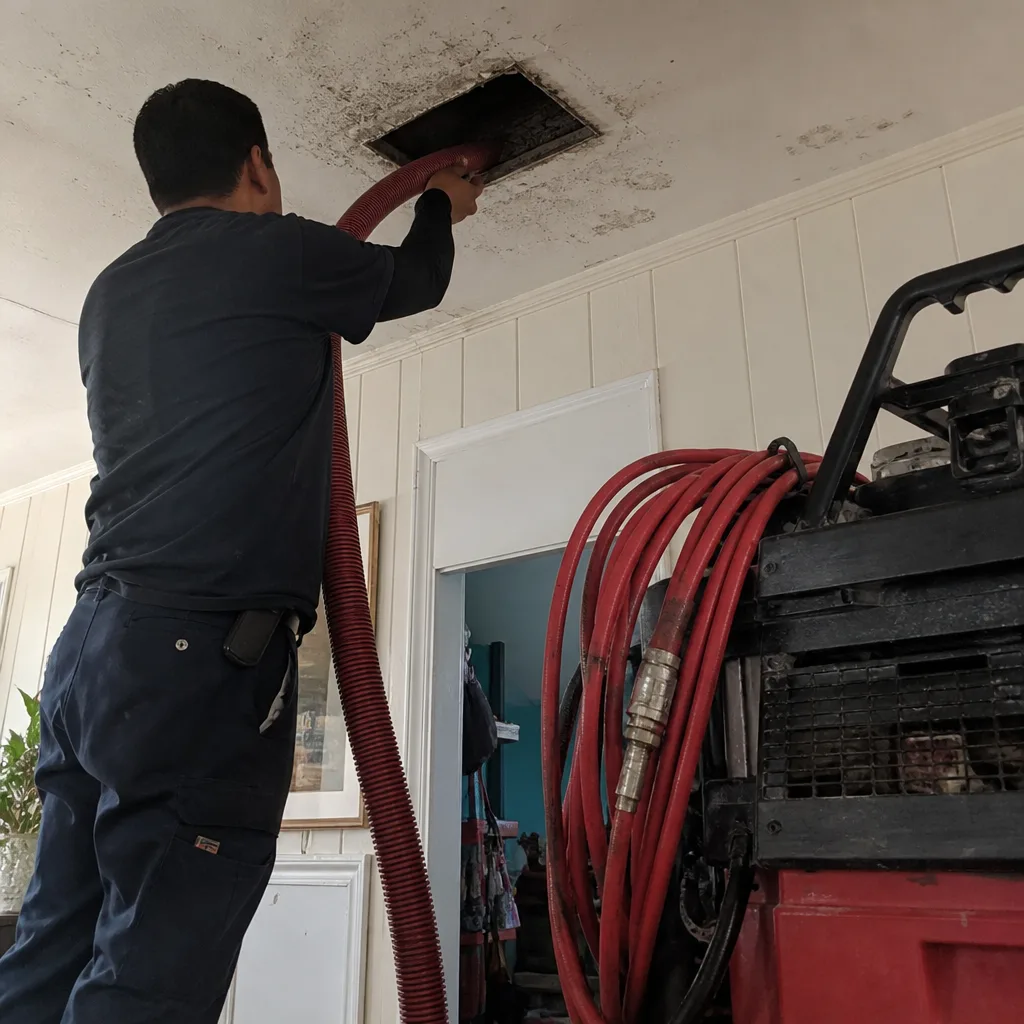
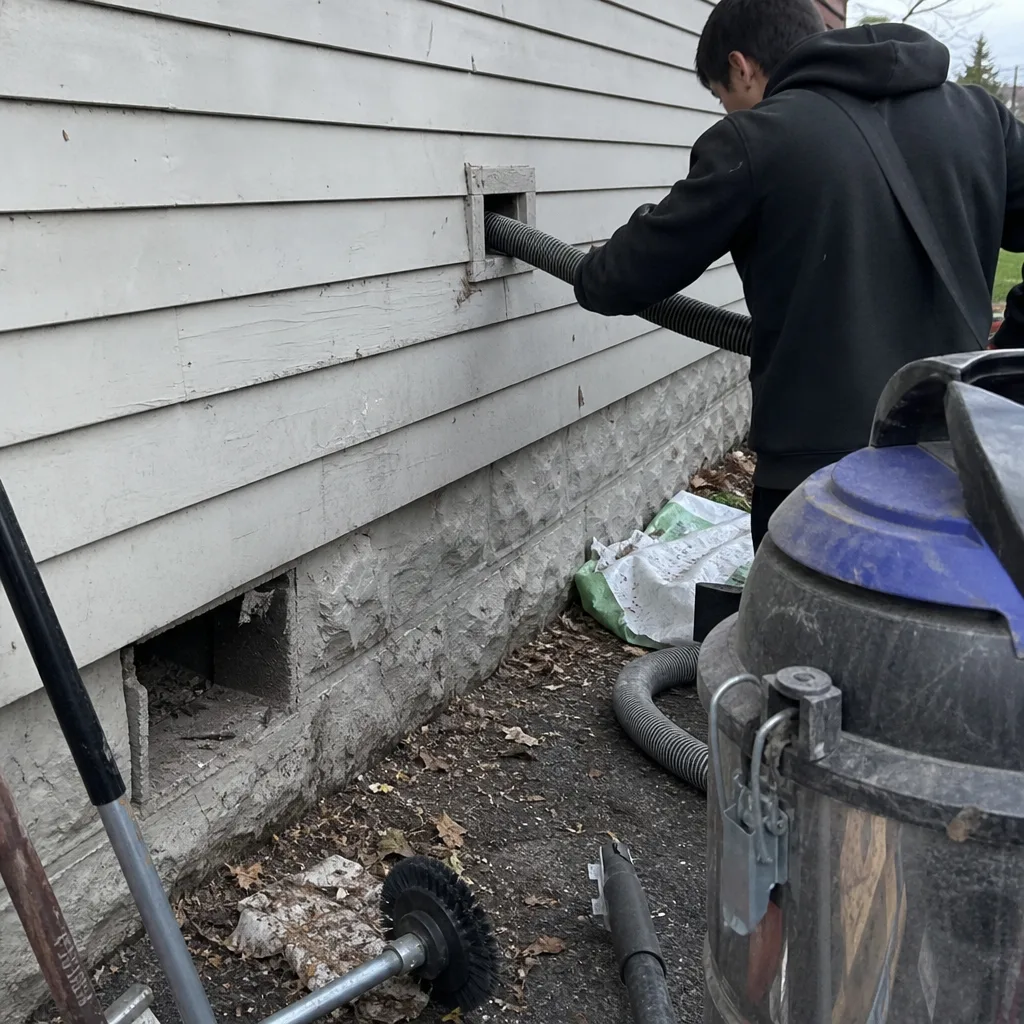 Before
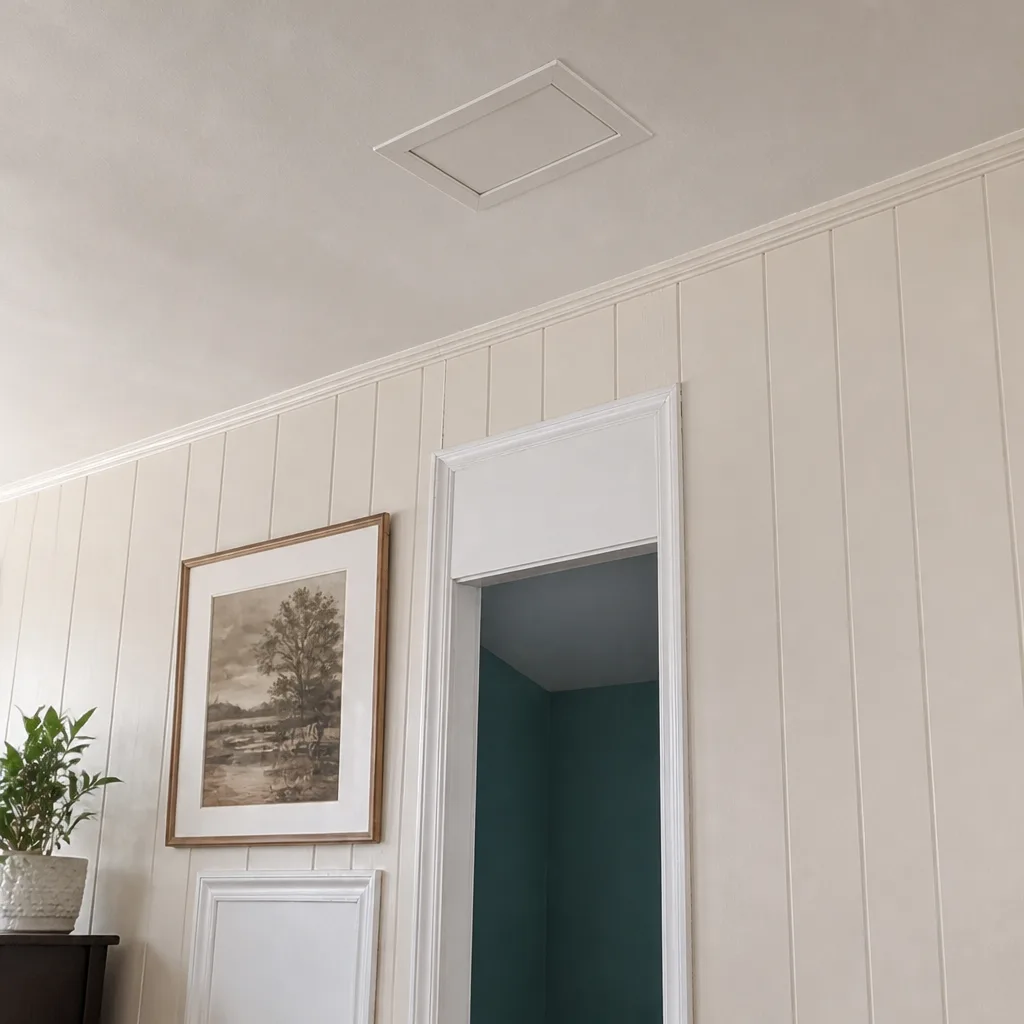
 After
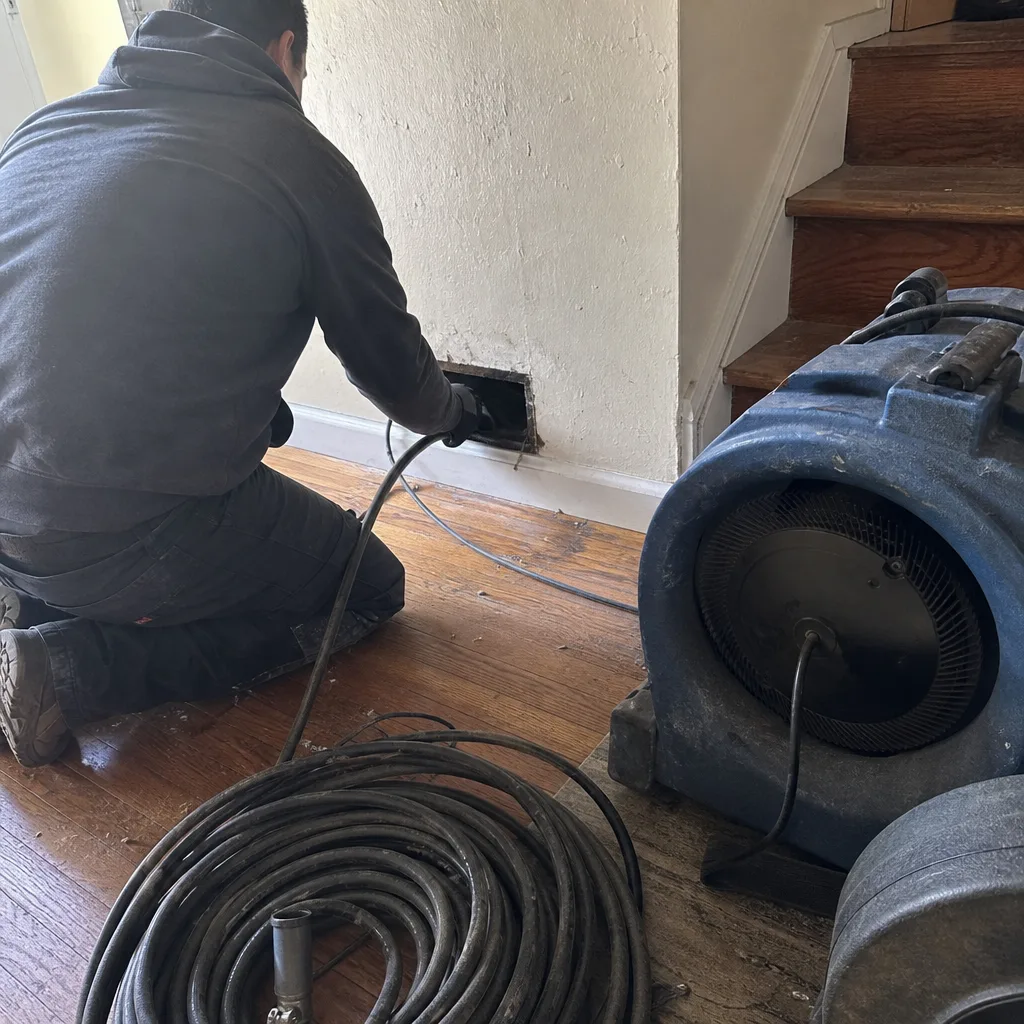
 Before
 After
 Before
 After
When to Call a Professional
Call a specialist when you have two or more of the warning signs on this page at the same time, when register discoloration appears at three or more registers, when a musty or stale smell returns after a cleaning, or when you’ve cleared a pest problem and the ducts still need cleaning and sanitizing. Call sooner if the smell is acrid or the system’s behavior has changed suddenly; those are safety and equipment issues that need a trained technician.
Air Duct Cleaning Throggs Neck offers free estimates in Throggs Neck. Call (866) 558-4773. We answer 24/7. Fast dispatch from 7am to 7pm, Sunday through Friday. Also worth noting for dryer vent concerns: dryer vent cleaning is part of our service scope, since many of the same warning signs apply to that system.
Frequently Asked Questions
The most common warning signs are symptoms that worsen indoors and improve outdoors, stale or musty smells at registers, gray or black discoloration around supply registers, rising energy bills with no change in usage, uneven heating and cooling, and pest sounds or debris. Two or more appearing together usually means the problem has been building inside the duct system for a while.
A musty smell usually points to moisture and mold in the ducts, a stale smell to accumulated biological debris, and an acrid or burning smell to equipment issues like an electrical component or heat exchanger. Only the first two are cleaning problems. If you smell acrid or burning, turn the system off and call an HVAC specialist.
Because the trigger is often indoor air, not outdoor air. If symptoms spike in the first 15 minutes after the heat or AC turns on and improve when you leave the room or the house, the duct system is the likely source. That pattern is also more pronounced in winter when the windows stay closed and the same indoor air keeps recirculating.
Not necessarily on their own. Gray halos usually point to filter bypass or a loose register connection, and black streaks often point to moisture infiltration or localized airflow problems. Either pattern at three or more registers is worth investigating, and a specialist can tell you whether cleaning, sealing, or both are needed.
Call pest control first. Active pests should be handled before any cleaning, so that the duct system can be cleaned and sanitized rather than stirring up debris. Once the infestation is cleared, duct cleaning and sanitizing are the right next step.
You can check filters, look for register discoloration, note smells, and track your symptoms. What you shouldn’t do is remove register covers and reach into the ducts: the debris and sharp edges make that more dangerous than it appears. A trained specialist can inspect the full system safely and tell you what’s actually going on.
The Bottom Line
The earliest duct warnings usually aren’t visible. They’re in the timing of your symptoms, the character of a smell, the pattern of dust on a register, and the way your system runs. Read those signals, and you catch problems months earlier than the homeowner who waits for a visible mess or a doctor’s visit. In Throggs Neck, older houses and multi-unit buildings show these signs sooner, which makes sealing as important as cleaning. When two or more signs line up, get the system looked at.
Call (866) 558-4773 for a free estimate. We answer 24/7. Fast dispatch from 7am to 7pm, Sunday through Friday.
Written by the team at Air Duct Cleaning Throggs Neck.