
Last updated November 25, 2026
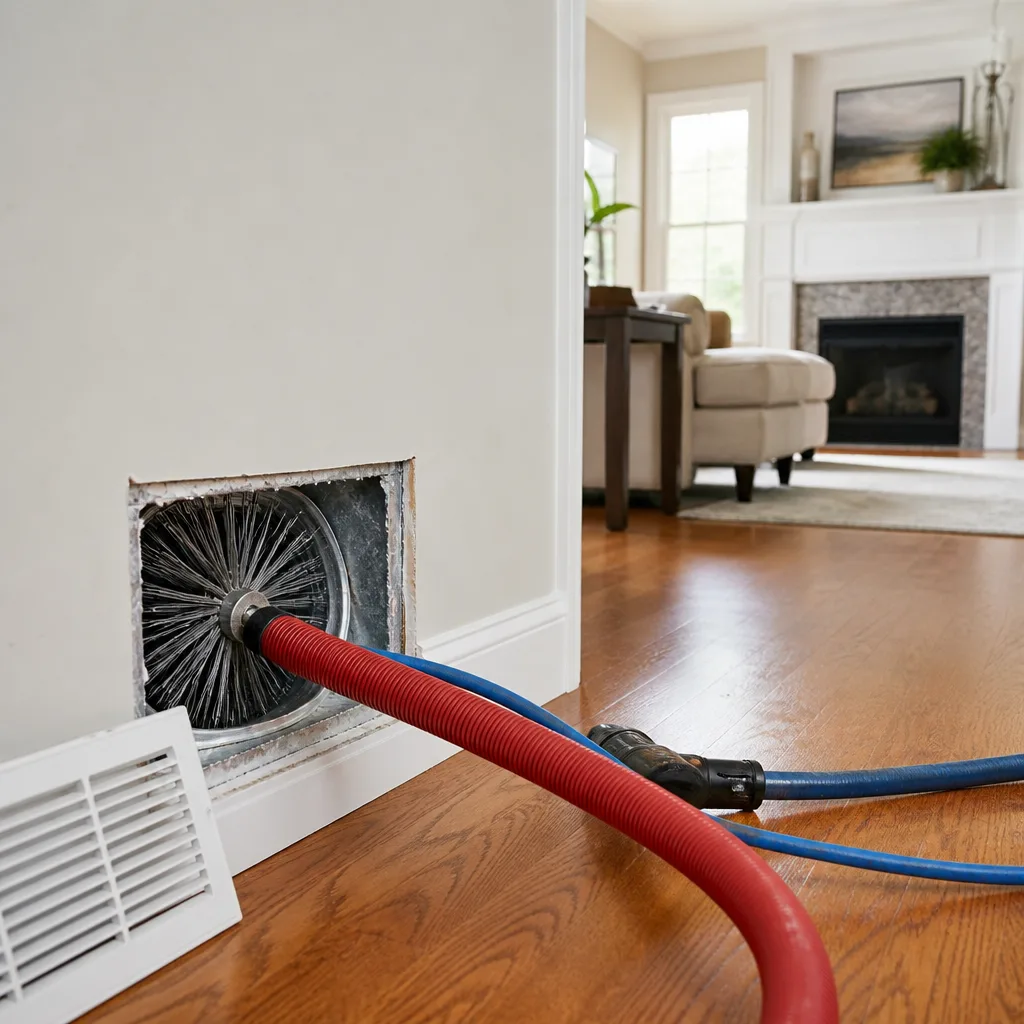 Whole-home duct cleaning
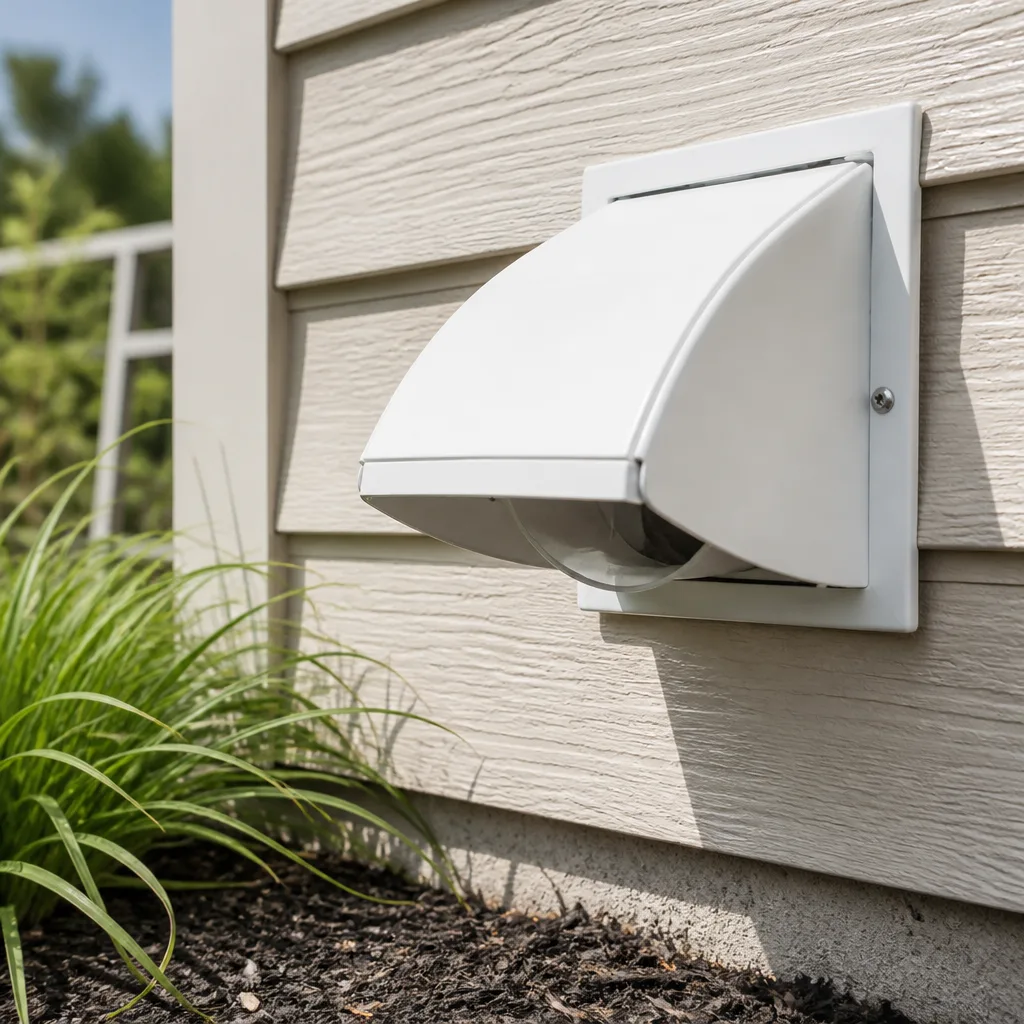 Dryer vent cleaning
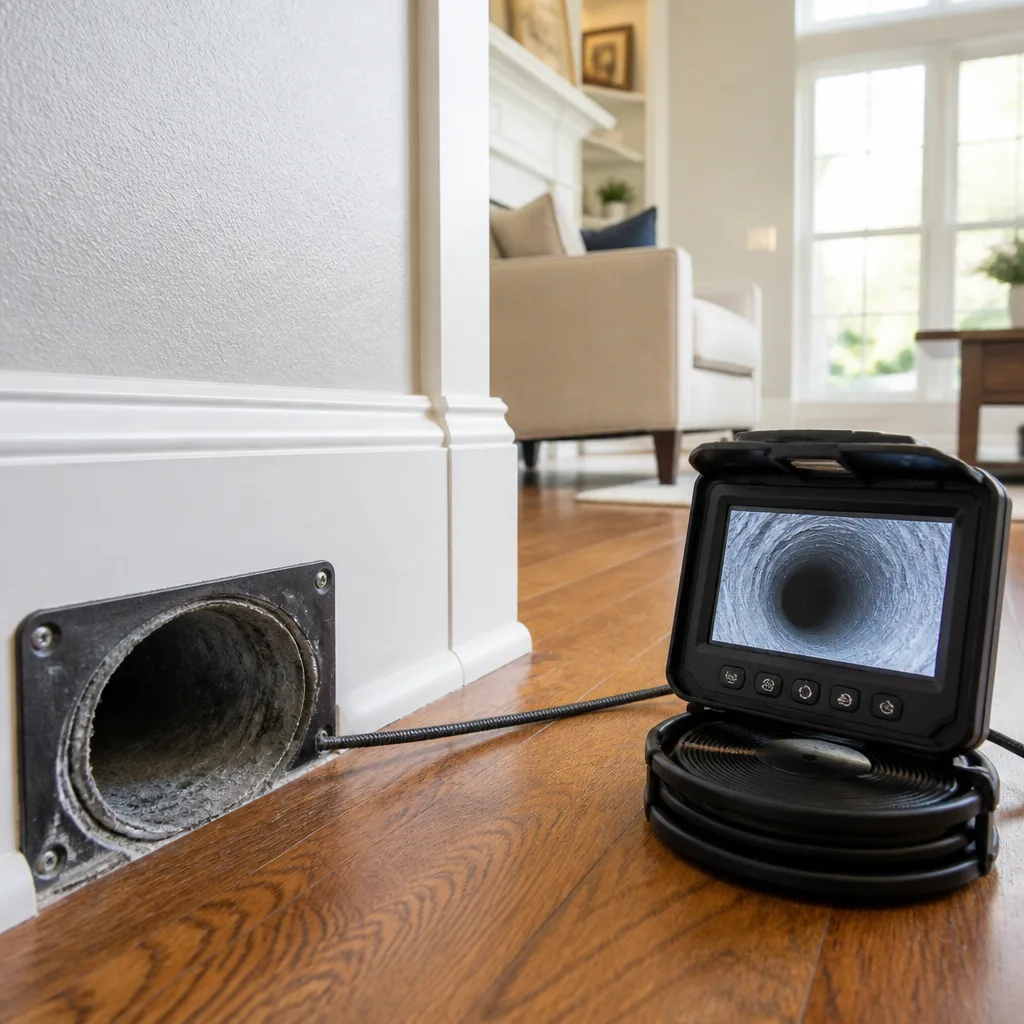 Camera inspection
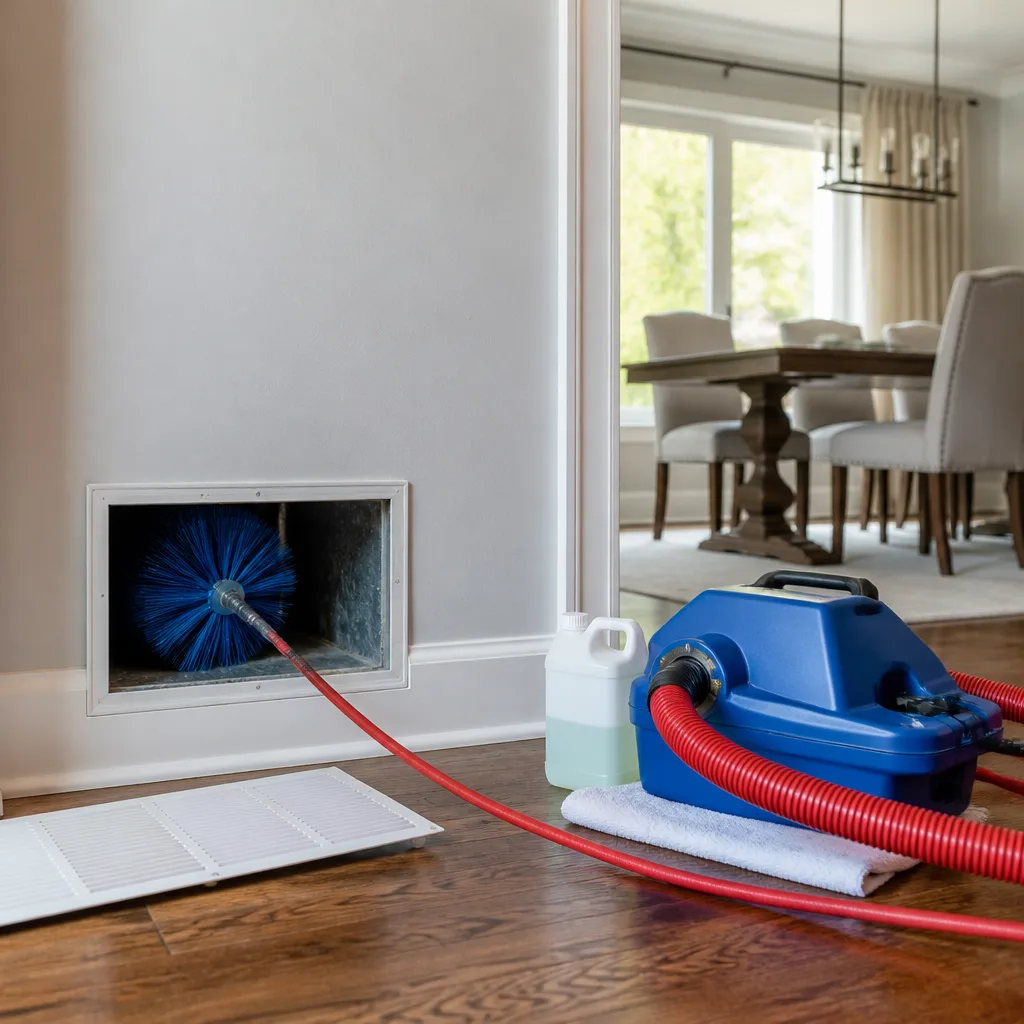 Sanitizing & deodorizing
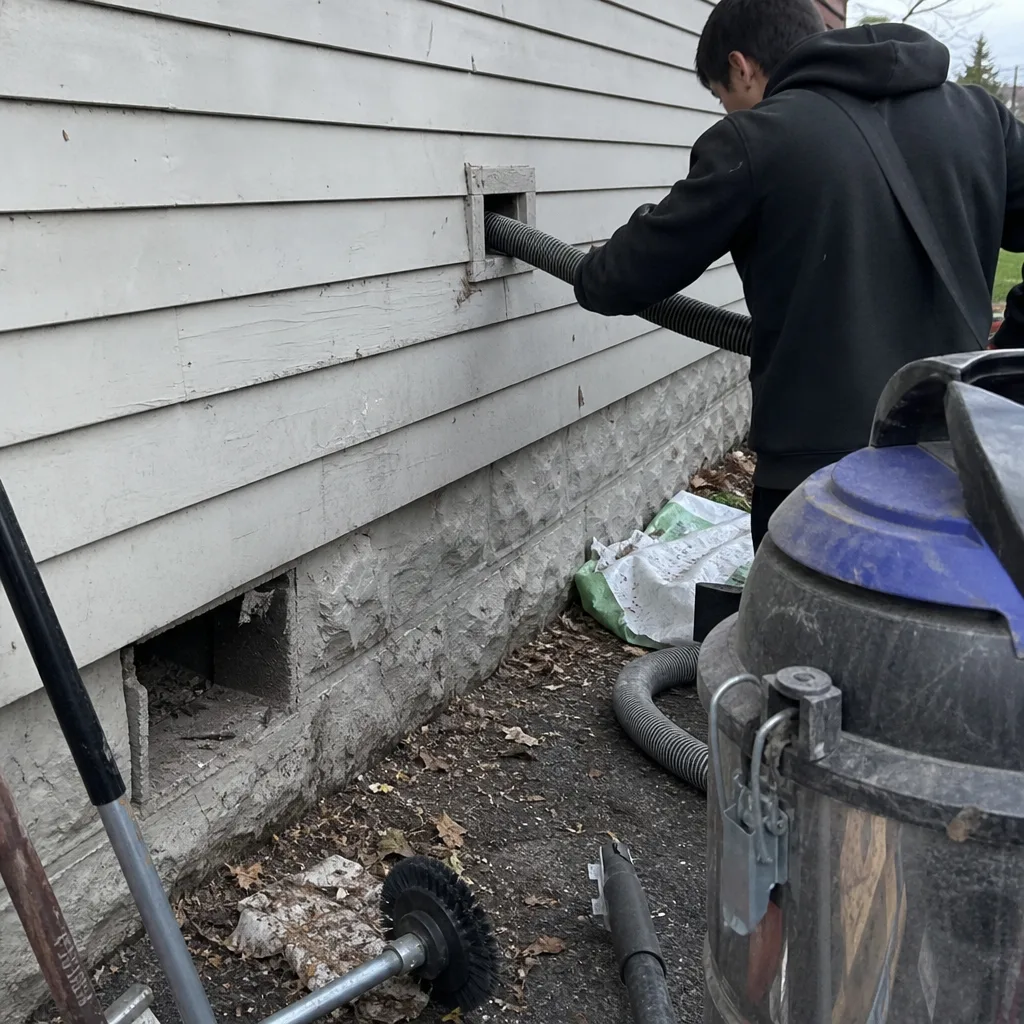
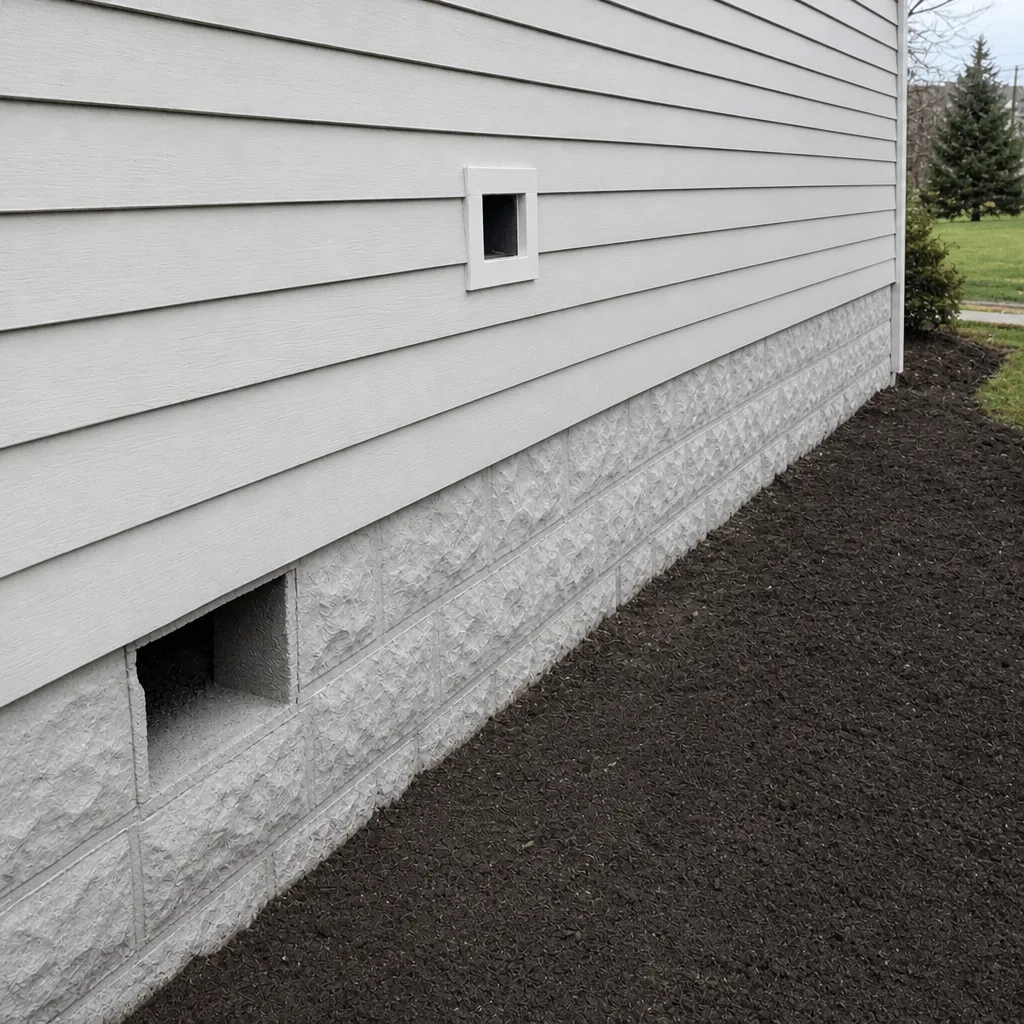
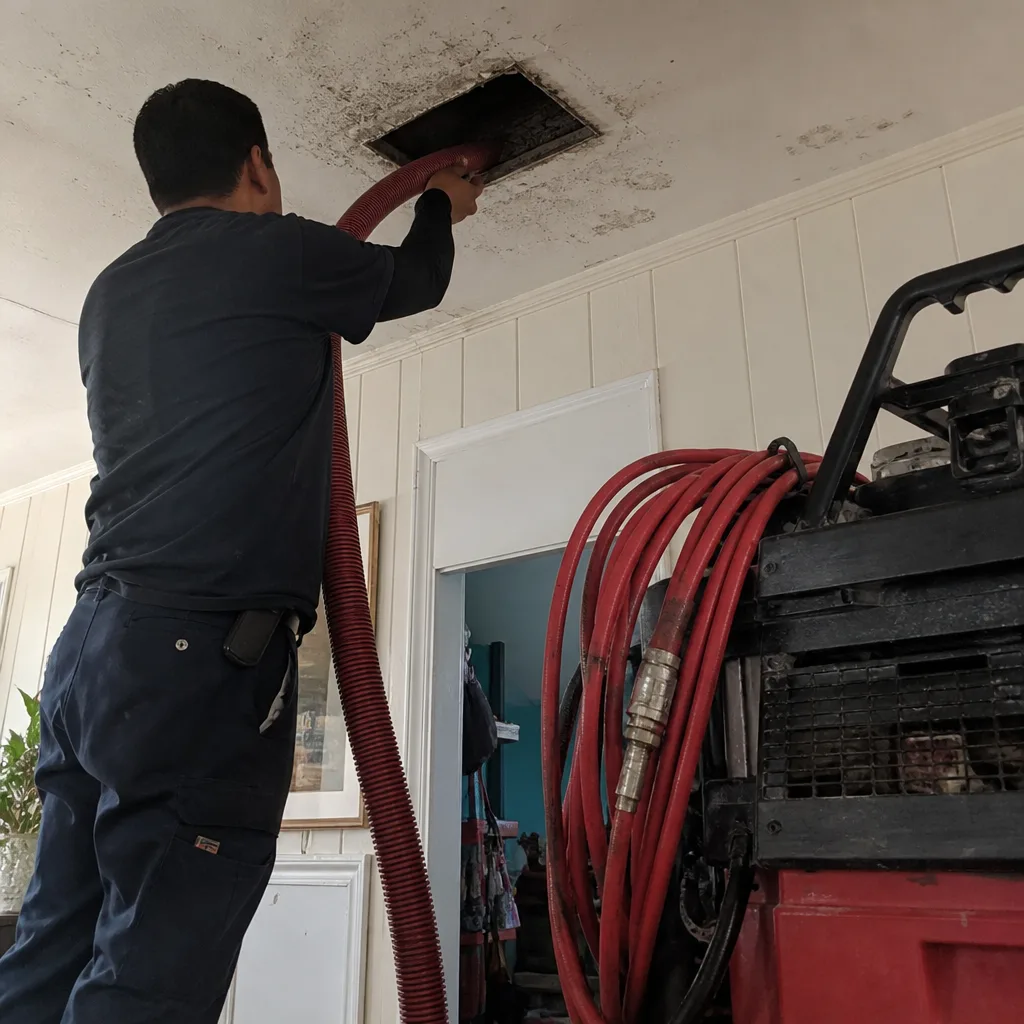
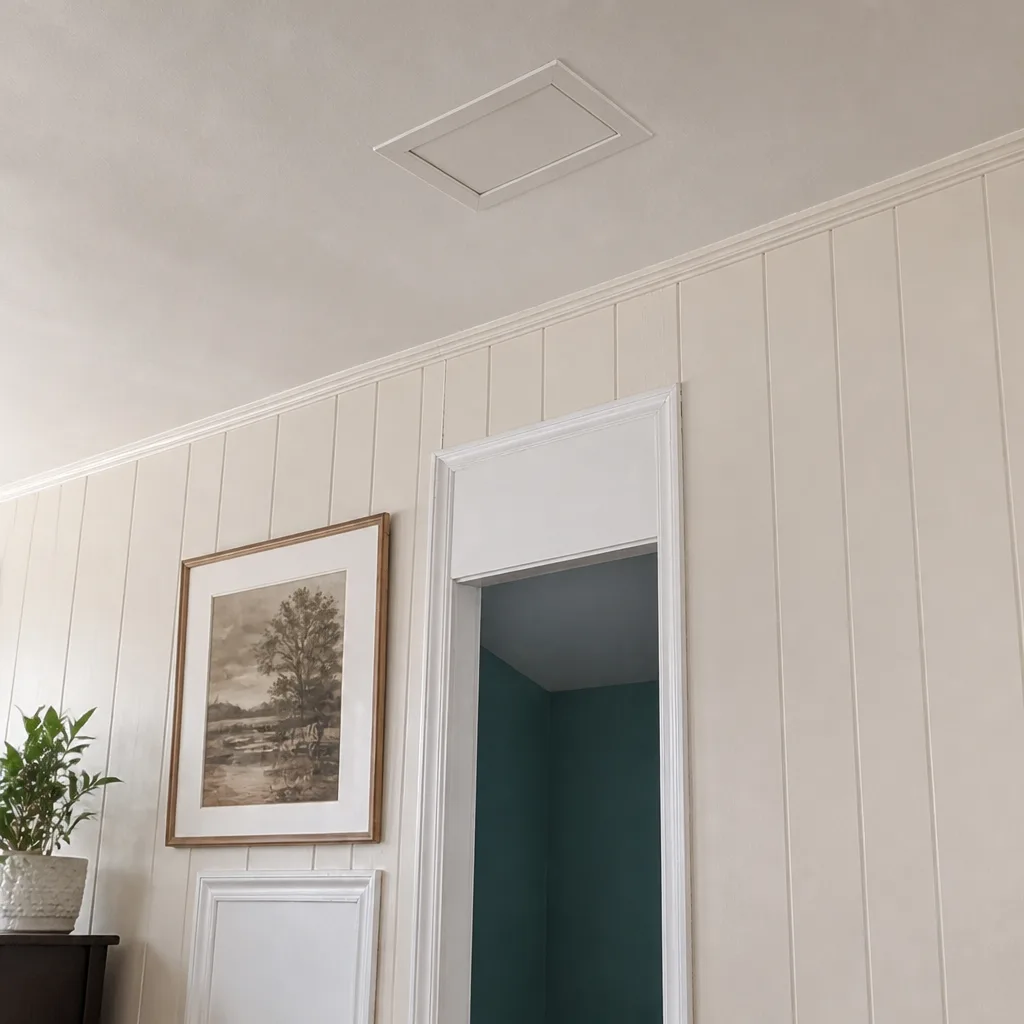
Whole-system duct and dryer vent check with before-and-after photos - you see exactly what came out of your vents
That "$99 whole-house special" is a bait ad - the real number appears once they are in your hallway, or the "clean" is a shop-vac at the register. We photograph the inside of your ducts before and after instead.
Air Duct Cleaning Emergency Preparedness Guide for Throggs Neck Homes
Most emergency guides walk you through shutting off gas, photographing damage, and calling the insurance company. Almost none of them tell you what to do about the ducts. That gap matters. After a flood or a fire, the duct system becomes the one part of the house that can distribute contamination into every room in minutes, and it’s also the part most homeowners forget until the blower comes back on and the whole house smells like the basement. This guide covers the protocol that other preparedness guides skip: what happens to ductwork during flooding, fire, and severe storms in Throggs Neck, why the HVAC system must stay off until the ductwork is inspected, and how to document duct contamination so your adjuster keeps it in scope.
Quick Answer
After a flood, fire, or severe storm event in Throggs Neck, keep the HVAC system off until a technician inspects the ductwork and confirms it is dry, clean, and free of biological growth. Silt, soot, and mold spores that enter the ducts during a weather event will spread through every conditioned room the moment the blower runs. The 24 to 72 hour window after water intrusion determines whether cleaning is enough or whether a duct section needs replacement, so the inspection is time-sensitive.
Styles & brands we work with
- Whole-home duct cleaning
- Dryer vent cleaning
- Camera inspection
- Sanitizing & deodorizing
Table of Contents
- The Flood Event Protocol: Why Ductwork Must Be Inspected Before the HVAC Restart
- The Fire and Smoke Protocol: Coating vs. Soot Infiltration
- The Mold Growth Window in Wet Ductwork
- How to Identify Water Intrusion in Low-Lying Duct Runs
- What to Tell Your Insurance Adjuster About Duct Contamination
- Pre-Event Preparation: What Throggs Neck Homeowners Can Do Now
- What Happens When You Call
The Flood Event Protocol: Why Ductwork Must Be Inspected Before the HVAC Restart
The instinct after water recedes is to flip the thermostat and see if everything still works. That instinct does damage. Ductwork in Throggs Neck homes runs through basements, crawlspaces, and low first floors where flood water reaches first, and whatever entered the system during the flood is sitting in the duct runs waiting for the blower. When you restart, every room gets a share of it. Silt from the street, sediment from a backed-up drain, and whatever else was in the water now travels through the supply registers before anyone smells a thing.
Here’s the sequence we recommend after any flood event:
- Shut the HVAC system off at the thermostat and the breaker. Don’t run the fan on “on” mode to dry things out. That’s the single biggest mistake we see.
- Photograph the water line on every duct run you can see. Basement trunk lines, crawlspace flex runs, and floor registers are the usual places to document.
- Note the water source (street flooding, sewer backup, roof leak, sump failure) so your technician and your adjuster know what biological risk applies.
- Call for duct inspection before you call for any HVAC repair. A technician needs to confirm the ductwork is clean and dry before the system goes back into service.
- Only after the ducts are cleaned and cleared does the HVAC restart happen, and even then with a filter change and a quick check of the evaporator coil.
The reason the order matters is contamination, not comfort. Duct metal and flex both hold moisture for far longer than a basement floor does, and the temperature inside a duct is often in the range where mold and bacteria grow best. If the inspection happens before the restart, the ductwork can be cleaned and sanitized without spreading anything. If the restart happens first, cleaning becomes a bigger job.
The Fire and Smoke Protocol: Coating vs. Soot Infiltration
Smoke damage is not one problem. It’s two, and they get treated differently in the ductwork.
Smoke odor coating is the residue that lands on a surface: interior duct walls, registers, the air handler cabinet, the evaporator coil. It smells sharp, and it settles into porous materials. During a fire, a closed HVAC system can draw smoke into the return ducts and hold it there for weeks. The coating is a cleaning and deodorization job, and it can be handled by our air quality and sanitizing service once the ducts are mechanically cleaned.
Soot infiltration is different. Soot is particulate. It is fine enough to pass through a standard filter and to sit inside flex duct ribs, in the crevices of insulated runs, and along the internal seams of sheet metal. It penetrates. Cleaning soot out of a duct system requires mechanical agitation and containment, which is why we use Abatement Technologies equipment in smoke jobs and why consumer-grade vacuums don’t apply here. The equipment captures particulates instead of just blowing them downstream into the next room.
HVAC shutdown during a fire is one of the most important things a homeowner can do. In a fire, if the system stays on, it pulls smoke into the return duct from the room where the fire is burning and drops it into every supply register in the house. In our experience, the homes that have the least duct contamination after a fire are the ones where the system was shut at the breaker as soon as the alarm sounded. That’s a 30-second action you can rehearse.
After the fire is out, the sequence for the ductwork is:
- Keep the system off until a technician inspects it.
- Document smoke and soot evidence on the return grilles, the duct interior where visible, and inside the air handler.
- Schedule duct cleaning and sanitizing before restarting the HVAC system, not after.
- Replace the filter, then run the system and check for residual odor before closing the job.
The Mold Growth Window in Wet Ductwork
Mold in wet ductwork isn’t a someday problem. Under normal indoor conditions, building materials and duct surfaces that stay wet long enough enter the growth window in roughly 24 to 72 hours. The exact timing depends on temperature, humidity, and how long the moisture stays put. What matters for decision-making is the cut-off:
- Dried within the first 24 hours: biological growth usually hasn’t established. Cleaning the ducts and confirming dryness is typically enough.
- Wet for 24 to 72 hours: growth is likely starting on porous materials. Cleaning and sanitizing is the standard response, and duct insulation is checked closely.
- Wet more than 72 hours: porous duct materials (flex, internal insulation, fiberglass board) often cannot be cleaned back to a safe state. In these cases, the contaminated section is removed and replaced, and the rest of the system is cleaned and sanitized.
This is the distinction that separates a cleaning call from a replacement job. It’s also why “let it dry out over the weekend” is a bad plan in flooded ductwork. The ducts are the slowest part of the house to dry, and their interior surfaces are the least accessible.
One more point specific to Throggs Neck: many homes here have a combination of basement trunk lines and first-floor branch runs through interior walls. A flood that reaches the basement may wet the trunk but not the branches, and a moisture meter will tell you which is which. A technician reads that before recommending a scope, not after.
How to Identify Water Intrusion in Low-Lying Duct Runs
You don’t need a moisture meter in hand to spot the warning signs. Here’s what trained eyes look for, and what you can look for yourself after any flooding event:
- Water stains on basement trunk lines. Look for mineral lines or tide marks along the bottom of the duct run.
- Rust at the seams and hangers. Sheet metal that was wet long enough to rust tells you the water didn’t just pass by.
- Condensation on registers in the days after. A register that’s sweating long after the AC cycle ends usually means moisture inside the duct or at the diffuser boot.
- Loose or sagging flex duct in the crawlspace. Wet flex sags, and often holds its shape after it dries.
- A cooling system that runs longer than it should. Water-filled insulation has an R-value near zero, and the system works harder to hold temperature.
- Musty odor at a specific register. If the smell is localized, the water is localized.
What you should not do is peel open ducts yourself to look inside. Flex duct is easy to tear, sheet metal edges are sharp, and re-sealing a duct run isn’t a tape-and-done job. What a technician does is different: a visual inspection of the interior with a camera, a moisture reading on the duct surfaces, and a check of the air handler and evaporator coil for moisture migration. That inspection determines whether the ductwork needs cleaning, sealing, or section replacement, and whether the HVAC cleaning should extend to the air handler.
If duct sealing is part of the repair, that’s a real fix, not a cosmetic one. Duct Repair & Sealing closes seams, joints, and disconnects that open up under water damage, and it keeps the cleaned system from losing conditioned air to the crawlspace afterward.
What to Tell Your Insurance Adjuster About Duct Contamination
Ductwork is written out of scope more often than it should be because homeowners describe it in the wrong language. “The house smells like the flood” invites “that’s a cleaning issue.” “The ductwork has water intrusion along the basement trunk with visible mineral staining at three joints, and the system was off from the day of the flood until now” invites a documented claim.
Specific language that keeps duct remediation in scope:
- Name the water source and its category. Street flooding, sewer backup, and clean supply-line breaks are treated differently.
- Note the time of intrusion and the HVAC shutdown time. The gap between them frames the mold risk.
- Photograph the water line, staining, and rust on all visible duct runs.
- Document any biological growth with close-up photos of duct interiors or register boots, taken before any cleaning work starts.
- Ask for an inspection report, not just a cleaning invoice. The company that inspects the ducts should be able to state whether the duct run is cleanable or requires replacement, and why.
- Request before-and-after photos of your own ducts. Insurers respond well to documentation that shows work performed. Homeowners appreciate it too.
What not to do: don’t clean the ducts yourself before the adjuster sees them. Surface cleaning hides the evidence of contamination, and an adjuster who can’t see the water line has no basis to approve the work. The duct cleaning happens after approval, not before.
If your fire or flood claim involves a light-commercial building in the neighborhood (a restaurant on East Tremont, an office on Bruckner), ask the adjuster to include the air handler and rooftop unit in the scope, not just the visible duct runs. In our experience those get overlooked because nobody thinks to write them down.
Pre-Event Preparation: What Throggs Neck Homeowners Can Do Now
The work that makes the biggest difference after a flood or fire happens before one. None of these steps costs anything, and all of them take under an hour.
- Locate and label the HVAC shutoff. Find the breaker that controls your furnace or air handler and put a label on it. Show everyone in the household. In an emergency, nobody wants to read a breaker panel by flashlight.
- Note the emergency shutoff for the gas or oil supply to the furnace or boiler. That’s often a different valve from the main.
- Photograph every accessible duct run. Basement trunk lines, crawlspace branches, register boots. Store the photos in a cloud folder. This is the baseline your adjuster will use.
- Write down the make and model of your air handler, thermostat, and any IAQ equipment. Aprilaire humidifiers and Honeywell controls are common in Throggs Neck homes, and knowing the models in advance makes replacement or re-commissioning faster.
- Keep an air-quality contractor’s number on file. Calling around for a duct specialist during the cleanup week after a storm wastes the window that matters most.
- Rehearse the shutdown. If the fire alarm goes off, everyone in the house should know to hit that breaker on the way out.
One other step worth considering for the low-lying duct runs: a moisture sensor in the basement, near the trunk line, will tell you when a slow leak or a sump failure is under way. That’s cheap insurance against the 72-hour window closing before anyone notices.
What Happens When You Call
When a Throggs Neck homeowner calls after a flood, fire, or severe storm, the first conversation is about what happened and when. We ask about the water source, the water line, the timing of the HVAC shutdown, and what’s visible on the duct runs. Then we schedule an inspection and cleaning. We answer 24/7, and dispatch runs from 7am to 7pm, Sunday through Friday.
The first visit is an inspection, not a cleaning. A technician checks the visible duct runs, reads moisture on the surfaces that matter, and looks at the air handler and coil. That’s when we know whether the answer is cleaning and sanitizing, or section replacement and re-sealing. You get a written estimate, one flat price per system agreed before work starts. Before-and-after photos of your own ducts are part of the job, because that’s the record your adjuster wants and the record you deserve.
Where mold is present, cleaned doesn’t mean clean unless it’s also disinfected, and Air Quality & Sanitizing is part of the scope. Where the ducts are wet because of a failed joint or a torn flex run, Duct Repair & Sealing closes that break before the system goes back into use. Where dryer vent work is part of the household safety picture, dryer vent cleaning handles lint buildup that’s just as much a fire risk as a blocked duct. The air duct cleaning service is the base scope, and the other work extends from there.
Common Mistakes to Avoid
- Running the fan to “dry things out” after flooding. That’s the fastest way to spread whatever entered the ducts into every room. Keep the system off until a technician clears it.
- Waiting for the weekend to inspect the ducts. The 24 to 72 hour mold window doesn’t pause for convenience. If water reached the ducts, the clock is already running.
- Letting a general handyman handle post-flood duct work. Portable consumer vacuums make ducts look clean without actually cleaning them. The equipment matters: Rotobrush and Nikro systems agitate and extract; shop vacs recirculate.
- Cleaning ducts before the insurance adjuster sees them. Surface cleaning removes the evidence that would have paid for the job. Photograph first, clean second.
- Assuming the ducts are fine because the house doesn’t smell. Odor is a lagging indicator. Musty smell shows up days after the growth does.
- Skipping dryer vent cleaning after a flood. Water in a dryer vent run leaves lint wet against the pipe, and it dries into a dense deposit that’s a worse fire risk than before.
- Restarting the HVAC without changing the filter. A saturated filter passes less air and pushes the system harder. Change it as part of the restart, every time.
See the difference
 Before
 After
 Before
 After
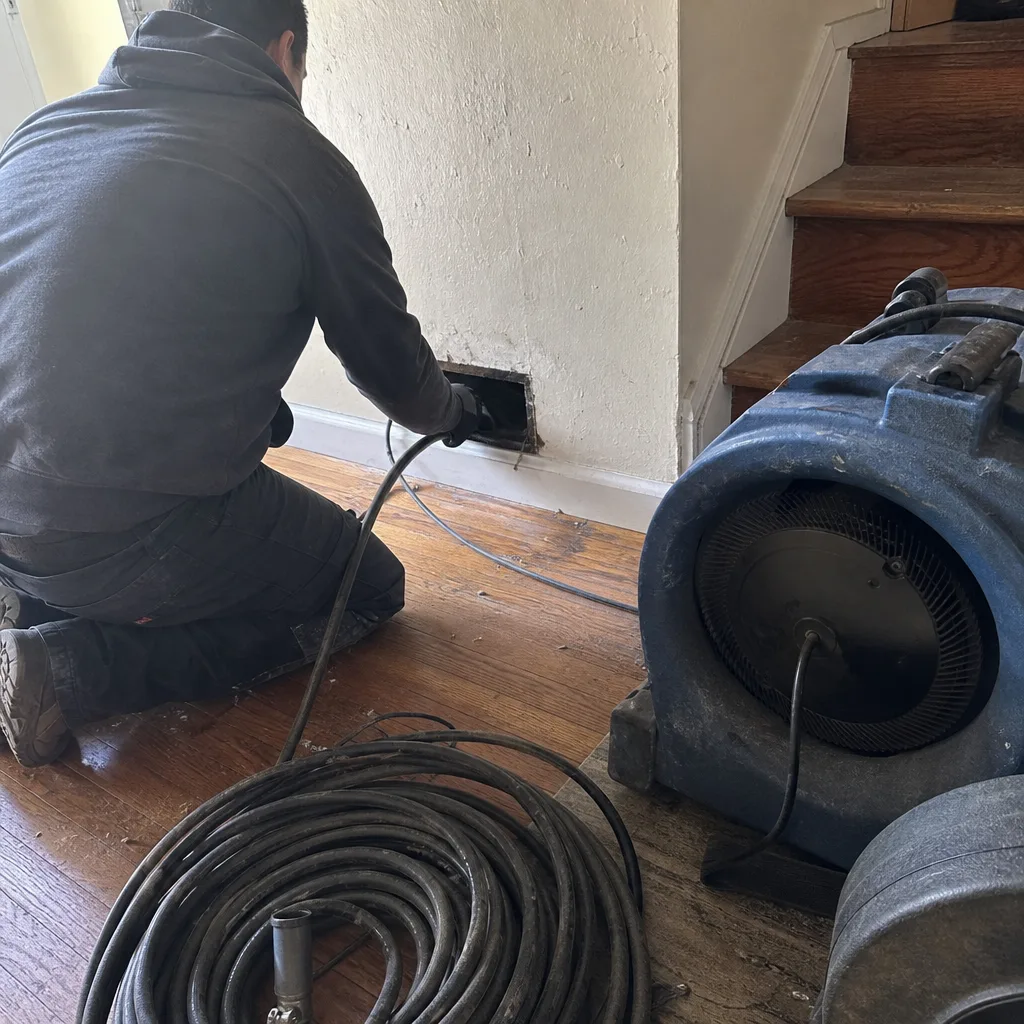 Before
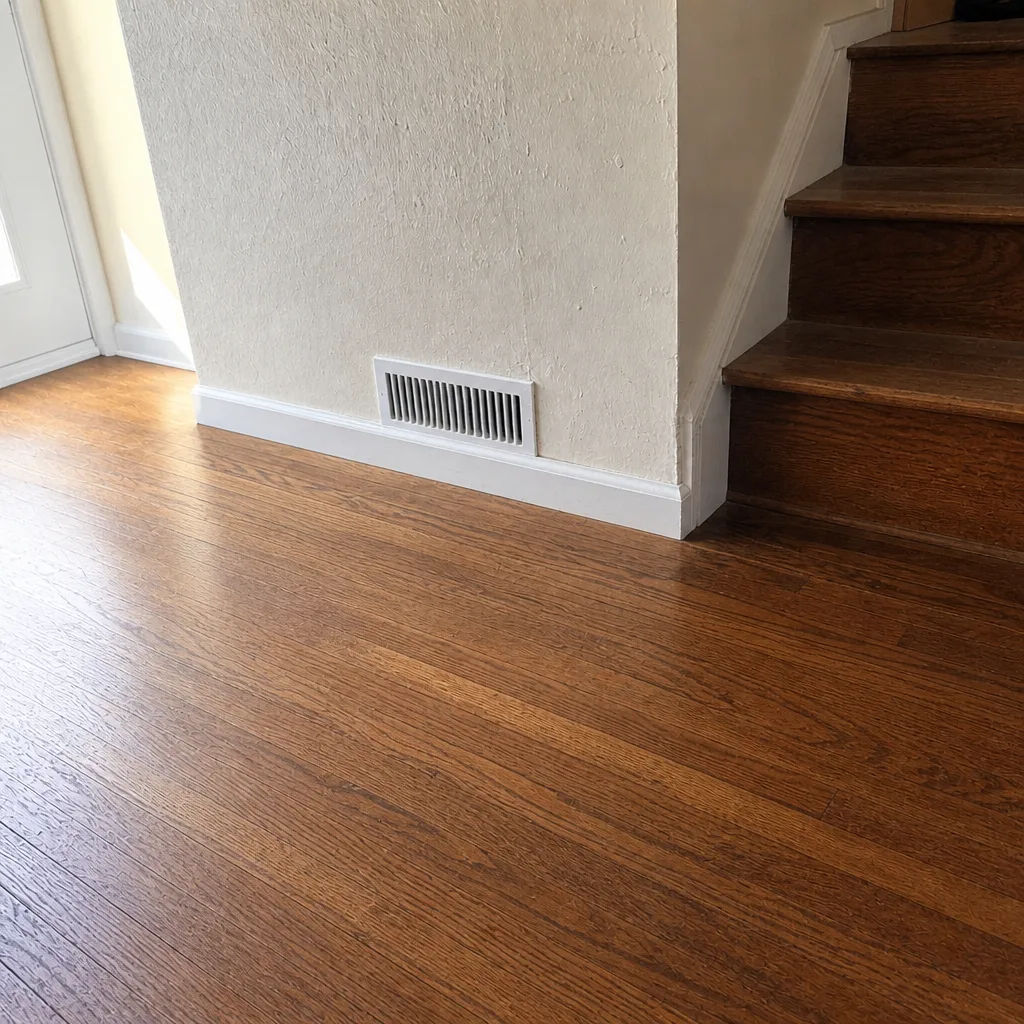 After
When to Call a Professional
Call a professional if water reached any visible duct run, whether that’s a basement trunk, a crawlspace branch, or a register boot. Call if fire or smoke entered the home while the HVAC system was running. Call if you can smell a musty odor at one or more registers, if your registers sweat long after the AC cycle, or if you notice rust at the seams of duct work. Call before you restart the system after any flooding event. Call before you clean anything yourself for an insurance claim. Air Duct Cleaning Throggs Neck offers free estimates in Throggs Neck. Call (866) 558-4773. We answer 24/7. Fast dispatch from 7am to 7pm, Sunday through Friday.
Frequently Asked Questions
No. Duct surfaces can look dry while still holding moisture in insulation, seams, or the air handler cabinet, and restarting the system spreads that moisture into every room. A technician needs to confirm the ducts are dry and free of biological growth before the system goes back into use. Call (866) 558-4773 for a free estimate. We answer 24/7. Fast dispatch from 7am to 7pm, Sunday through Friday.
Roughly 24 to 72 hours from the time water enters the ductwork, depending on temperature and how long the moisture stays. Wet duct surfaces that stay wet past 72 hours often cannot be cleaned back to a safe state, and porous materials are replaced rather than cleaned. Call (866) 558-4773. We answer 24/7.
Often yes, if duct contamination is documented as part of the water damage claim. That means photographs of the water line, a written note of the water source and the HVAC shutdown time, and a professional inspection report that states what needs cleaning and what needs replacement. Cleaning before the adjuster documents the damage usually disqualifies the work. Call (866) 558-4773 to schedule an inspection before anything else happens. We answer 24/7.
Yes, if the HVAC system was running, smoke gets pulled into the return ducts and distributed to every room through the supply registers. Smoke odor coating can be cleaned and deodorized. Soot infiltration is a deeper problem, because soot is fine particulate that lodges in flex ribs and interior seams, and it needs mechanical agitation plus containment-grade equipment. Call (866) 558-4773 to book a smoke inspection. We answer 24/7.
Cleaning removes contamination from the inside of the ducts; sealing closes the joints, seams, and disconnects that opened up during the flood event. Cleaning without sealing can leave the cleaned system losing air to a crawlspace or basement. Both are part of the same repair when water damage is present. Call (866) 558-4773 for a free estimate on both. We answer 24/7. Fast dispatch from 7am to 7pm, Sunday through Friday.
Shut the HVAC system off at the thermostat and the breaker first. Then photograph any visible water line on basement trunks and crawlspace runs, note the water source, and call a duct specialist before restarting anything or calling for HVAC repair. Keep the system off until a technician inspects the ducts and clears them for use. Call (866) 558-4773. We answer 24/7.
The Bottom Line
The duct system is the part of a home that most preparedness guides skip, and it’s the part that decides whether contamination stays in the basement or spreads through every room. After a flood, keep the HVAC system off, document the water line, and call for a duct inspection within the 24 to 72 hour mold window. After a fire, shut the system off during the event and inspect before restarting. Before either happens, photograph the duct runs, label the breaker, and keep a duct specialist’s number on file. The air duct cleaning Throggs Neck work that follows is what gets a home back to clean, dry, and running safely.
Call (866) 558-4773 for a free estimate on duct inspection, cleaning, and post-event remediation in Throggs Neck. Our technicians have up to 9 years of experience, and we use professional-grade equipment from Rotobrush, Abatement Technologies, Nikro, Aprilaire, Honeywell, and Guardsman. The written estimate sets the final price, and it’s agreed before any work starts.
Written by the team at Air Duct Cleaning Throggs Neck.