
Last updated November 25, 2026
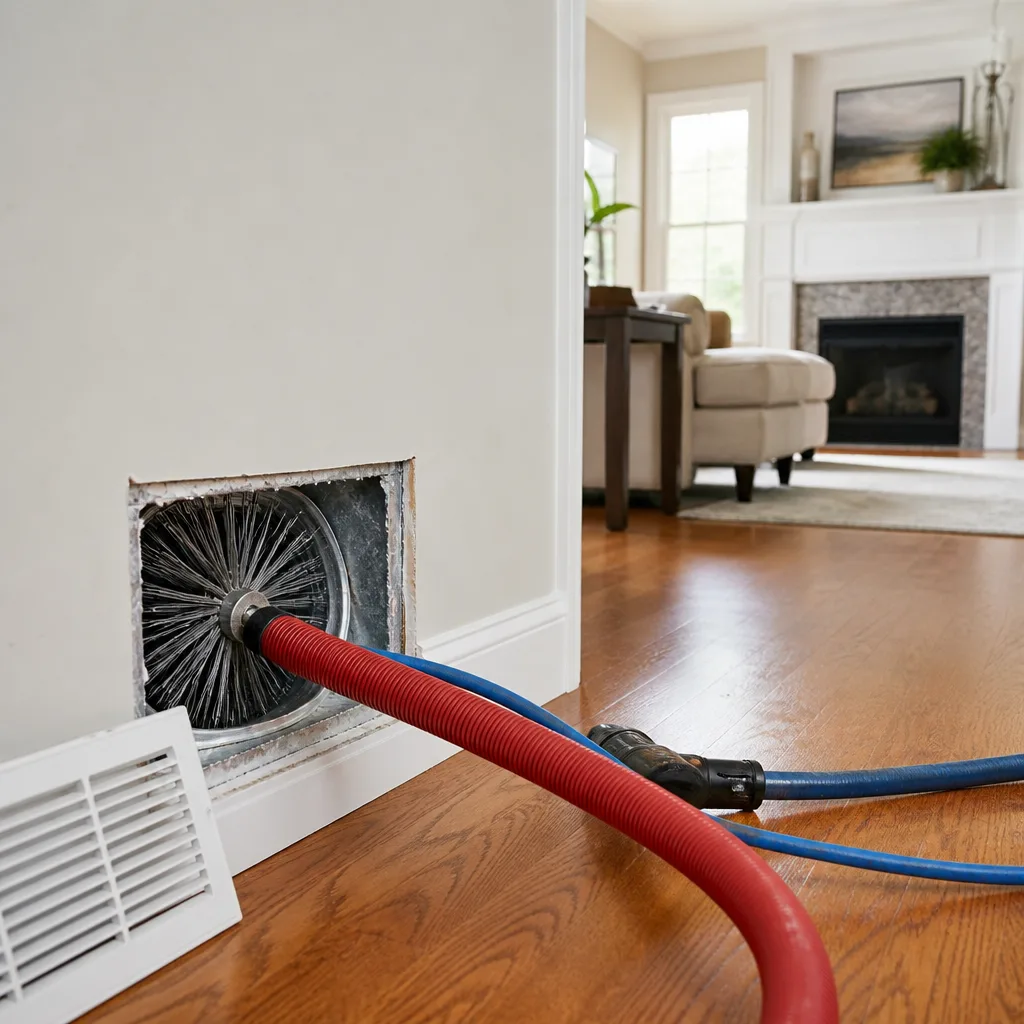 Whole-home duct cleaning
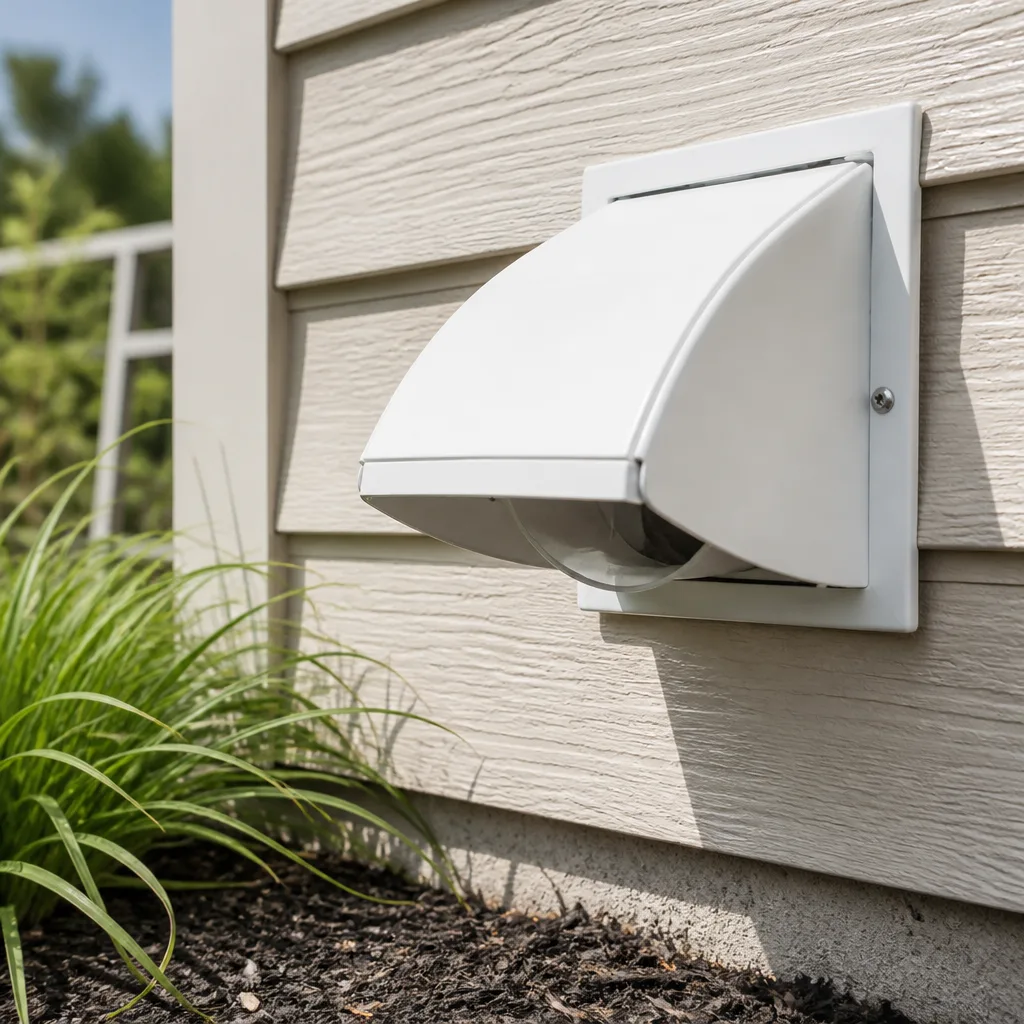 Dryer vent cleaning
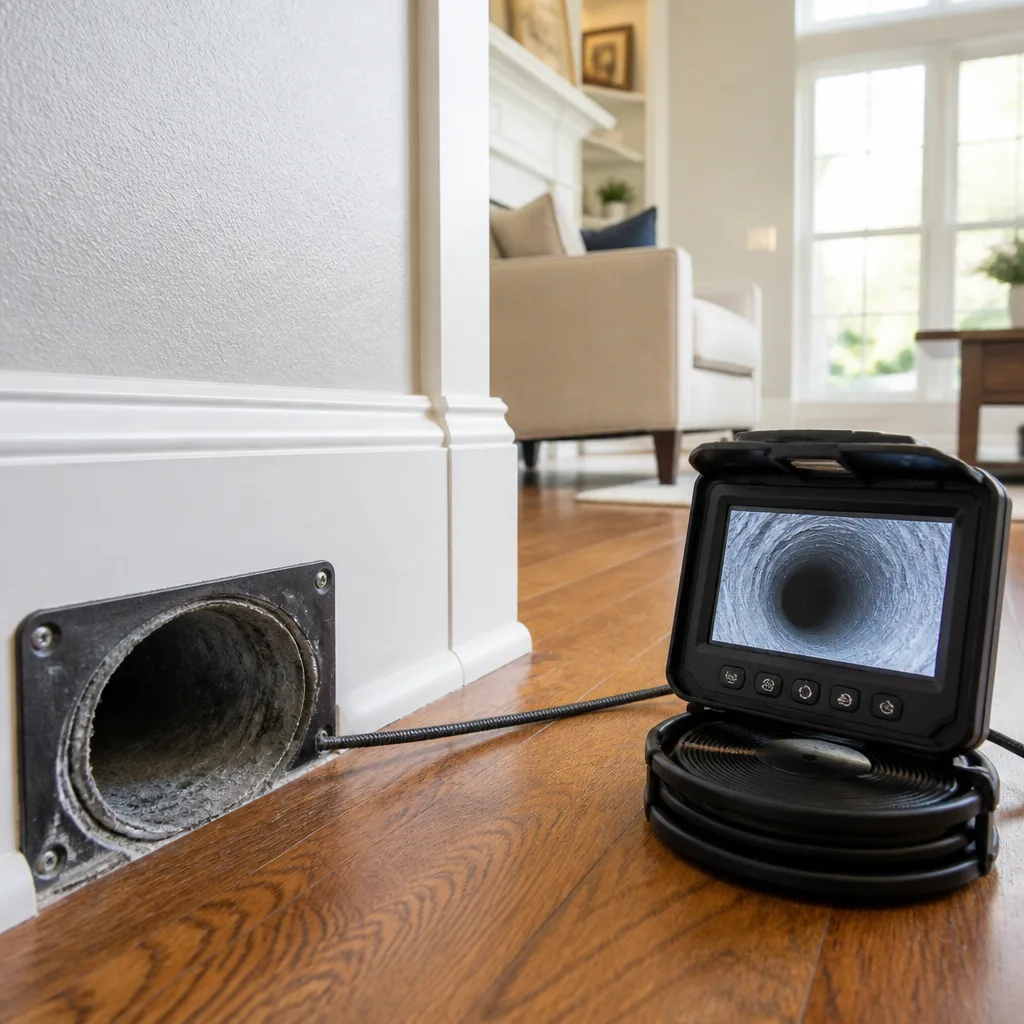 Camera inspection
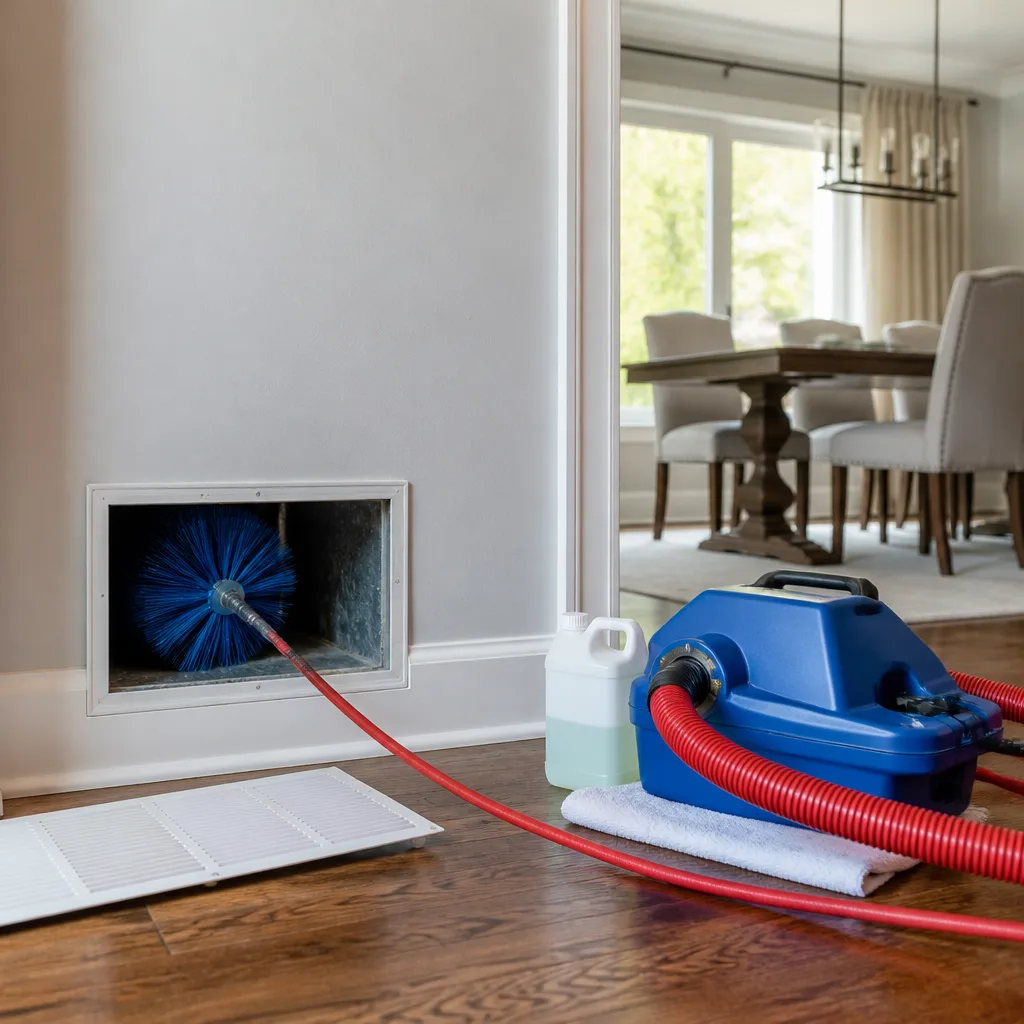 Sanitizing & deodorizing
Whole-system duct and dryer vent check with before-and-after photos - you see exactly what came out of your vents
That "$99 whole-house special" is a bait ad - the real number appears once they are in your hallway, or the "clean" is a shop-vac at the register. We photograph the inside of your ducts before and after instead.
Air Duct Cleaning Troubleshooting in Throggs Neck: Common Problems and How to Fix Them
If your air smells musty two weeks after a duct cleaning, the technician probably didn’t fail. Your flex duct liner may have a micro-tear that pulls unconditioned air from a crawl space or wall cavity, and that’s a different problem entirely, one no vacuum will ever solve. This is the part of duct work most people never hear about: persistent dust, bad odor, and uneven airflow are usually symptoms of a specific mechanical failure or a specific contamination type, and each one needs a different fix. In this guide we’ll walk through how to tell a cleaning failure from a duct integrity problem, why musty air often has nothing to do with the ducts themselves, what uneven room temperatures really mean, and the exact scenarios where sealing or a component repair beats a second cleaning visit. If you’re in Throggs Neck and your system still misbehaves after a cleaning, this is where to start diagnosing.
Quick Answer
If your ducts still seem dirty after a cleaning, the cause is usually not leftover dust but one of four things: a duct integrity problem (a gap, a collapsed flex run, or a disconnected joint), microbial growth on the air handler coil or drain pan, bypass leakage or an undersized return, or a blower problem that keeps redistributing what was dislodged. A proper diagnosis separates a cleaning failure from an equipment or ductwork failure before anyone schedules a second visit. Most “failed cleanings” in Throggs Neck turn out to be one of those four, and each has its own fix.
Styles & brands we work with
- Whole-home duct cleaning
- Dryer vent cleaning
- Camera inspection
- Sanitizing & deodorizing
Table of Contents
- How Do You Tell a Cleaning Failure From a Duct Integrity Problem?
- Why Does Your Air Still Smell Musty After Cleaning?
- What Do Uneven Room Temperatures Actually Indicate?
- What Negative Static Pressure Reveals About Your Blower and Your Ducts
- When Is a Second Cleaning Warranted and When Is It the Wrong Move?
- Duct Repair and Sealing: Fixing the Root Cause, Not the Symptom
- Why Equipment Grade Changes the Diagnosis
- The Two Systems That Get Blamed for Every Duct Problem
How Do You Tell a Cleaning Failure From a Duct Integrity Problem?
You test it at the register. Most duct problems homeowners try to diagnose by eye (“I still see dust on the vent”) are really airflow problems, and the cheapest way to separate a cleaning failure from a duct integrity failure is to check the flow at each supply register. The cardboard register test is exactly what it sounds like and doesn’t require tools.
- Tear a piece of light cardboard about four inches square, roughly a postcard.
- With the system running on fan only, hold it against a supply register so it covers most of the grille.
- Watch how it behaves. Strong, steady pull toward the register means the run is delivering air. A limp flutter, or a piece that barely moves, means that run is starved.
- Repeat at every register in the home. Note which ones are weak and which are strong.
- If the supply airflow feels much weaker than the return grille’s pull, that’s a strong sign the problem is upstream of the register: a collapsed flex duct, a disconnected joint, or a crushed run behind a wall.
What this tells you: if a room is weak at the register and the duct behind it is a sagging or kinked flex run, the cleaning didn’t miss anything, the branch is compromised. Flex duct installed in a tight attic or a cramped basement joist bay is prone to collapsing or tearing at the collar. When we map a complaint, the pattern matters more than any single register: one weak room points to a branch problem, and weak flow everywhere points to a return or blower problem. If several branches feel weak and the ductwork is old, that’s an air duct cleaning and inspection job where we look for gaps and tears, not just debris.
Throggs Neck is full of older housing stock where ducts run through tight attic space, finished basements, and the narrow gaps between floors. A run that was fine for years can get crushed under a sagging joist or pinched where it was routed. That’s why the register test comes first: it tells you whether you’re dealing with a cleaning issue at all.
Why Does Your Air Still Smell Musty After Cleaning?
Because the smell is almost certainly coming from the air handler coil or the drain pan, not the ducts. When a home smells musty two weeks after a cleaning, the most common cause is microbial growth on the evaporator coil or in the condensate pan that sits beneath it. The coil condenses moisture all summer, and that warm, wet film is exactly where mold and bacteria settle. Cleaning the ducts doesn’t touch it.
In our experience, the pattern is easy to spot: the musty smell is strongest right at the supply registers in the first minute of a cycle, and it gets worse in humid weather. That points straight at the air handler. Here’s how to narrow it down.
- Smell at registers only, strongest at startup. The coil or pan is likely the source, and the ducts are just carrying it.
- Smell throughout the room regardless of the system. That’s more likely a building issue (basement dampness, crawl space, or stored moisture) that a duct cleaning can’t reach.
- Smell that returns within days after cleaning. The contamination source wasn’t removed, or the coil and pan are reinfecting a clean duct system.
- Visible dark film or slick film on the drain pan. The pan needs cleaning and the growth needs treating.
Our HVAC cleaning service addresses the coil, drain pan, and blower housing that routine duct cleaning skips, which is why a full-system approach matters here. The ducts can be spotless while the coil quietly seeds the whole system with musty air. Once the coil and pan are cleaned, an air quality and sanitizing treatment can help knock down what’s left in the system, using containment-sensitive equipment suited to that job.
Don’t overlook the flex duct liner itself. The inside of a flex run is a thin plastic liner over a wire coil, and if that liner has a micro-tear, humidity from a crawl space or a wall cavity enters the duct every time the system runs. No cleaning will fix that. It’s an integrity problem, and sealing or replacing the run is the fix.
What Do Uneven Room Temperatures Actually Indicate?
Uneven temperatures are an airflow problem, not a debris problem. If one room stays cold in winter and hot in summer while the rest of the house is comfortable, the cleaning didn’t fail, the duct system is delivering the wrong amount of conditioned air to that room. The usual culprits are bypass leakage (air escaping through a gap before it reaches the room) or an undersized return that can’t feed enough air back to the blower.
Here’s the logic. A duct system is a closed loop: supply pushes conditioned air out, return pulls it back. If the return is undersized, the blower runs starved and the whole system underperforms. Some rooms lose out. If a supply duct has a gap at a joint or at a wall penetration, the conditioned air leaks into a crawl space or wall cavity before it ever reaches the room. Same result: one cool room, one sweatbox.
Throggs Neck homes add two wrinkles to this. First, finished basements and converted spaces often got a supply but no dedicated return, which quietly unbalances the system. Second, older ductwork that’s been added onto over the years frequently has more leaks than a modern install, especially at every joint and wall boot. A register test (above) plus a look at the return path in the problem room tells you which one you’re dealing with.
The fix isn’t another vacuuming pass. The fix is duct repair and sealing. Once the gaps at the collars, joints, and wall penetrations are sealed, the air that was leaking out reaches the room it was meant for. That’s why we treat sealing as part of the diagnosis, not as an upsell after cleaning. A clean duct that still leaks is a clean duct that still doesn’t work. Learn more about our approach to Air Duct Cleaning Throggs Neck and how we scope these jobs.
What Negative Static Pressure Reveals About Your Blower and Your Ducts
Static pressure is the part of duct diagnosis most homeowners never hear about, and it’s often the missing piece in a complaint that a cleaning didn’t fix. Static pressure is the resistance the blower has to push against in the duct system. Too much resistance, from dirty coils, restrictive filters, crushed ducts, or a failing blower, and the blower can’t move the air it needs. The result: weak flow, uneven temperatures, and a system that keeps redistributing contaminants the cleaning just dislodged.
Here’s what a negative or high-side static pressure reading tells you.
- High pressure on the supply side. Usually a restriction: undersized ductwork, a crushed run, or too many fittings. Air can’t get out, so it backs up and moves more slowly.
- High suction on the return side. Usually a restricted filter, a dirty return plenum, or an undersized return. The blower is gasping.
- Readings that bounce or behave unpredictably. An aging blower motor that’s finally giving up. A weak blower can’t hold constant pressure, so flow oscillates, and the dust the cleaning loosened gets stirred back into the airstream.
That last scenario is the one a cleaning alone can never fix. If the blower is failing or the pressure is way off, the cleaning makes a clean system, and the failing blower immediately redeposits dust where it came from. The homeowner calls back, convinced the cleaning failed. It didn’t. The blower was the problem all along.
We don’t expect anyone to buy a static pressure gauge to diagnose a house. The point is that when a cleaning doesn’t stick, the right next question is whether the system can physically move air. That’s a job for a trained technician with a manometer, and it’s part of how we scope a full-system cleaning using professional-grade equipment rather than a shop vac. If you’re wondering whether your system is circulating air effectively, the answer starts with measuring, not guessing.
When Is a Second Cleaning Warranted and When Is It the Wrong Move?
A second cleaning is warranted in a narrow set of cases: visibly heavy soiling that returned quickly, a heavy contamination load from a known event, or a cleaning that was done too lightly with the wrong equipment. In most “still dirty” cases, the second cleaning is the wrong move, and the right move is finding the cause. Here’s how to decide.
A second cleaning makes sense when:
- Before-and-after photos of the first cleaning showed light soiling that clearly shouldn’t have been there, and the first job was underpowered. That happens when a technician used a consumer-grade vacuum instead of a truck-grade system.
- There was a known contamination event since the first cleaning (renovation dust, a water intrusion, or a heavy animal-shedding season) and the ducts need another pass.
- The first cleaning covered only the main trunk and skipped the branches. That’s a partial job, not a failed one, and a full-system cleaning with containment will get the rest.
A second cleaning is the wrong move when:
- You’ve noticed musty odor, weak airflow, or uneven temperatures (see above). These are not dirt problems, and cleaning them twice won’t fix them.
- The dust returns within days. That’s a source problem, likely the coil, pan, blower, or a duct leak pulling dust in.
- A register test shows one branch starved. A collapsed or disconnected run has to be repaired, not cleaned.
- You’ve just had a cleaning and the complaint is “it looks the same.” Without before-and-after photos, you can’t actually know what changed.
The point of before-and-after photos isn’t marketing. It’s evidence. If the photos don’t exist, the first cleaning is hard to judge. If they do, you know whether the second cleaning is warranted or whether the real fix is sealing, coil cleaning, or a blower repair. If your complaint fits the second list, don’t pay for another cleaning. Find the cause first.
Duct Repair and Sealing: Fixing the Root Cause, Not the Symptom
Sealing is what makes a cleaning last. Cleaning removes contamination, but sealing closes the gaps that let new contamination and unconditioned air into the system. When we diagnose a re-soiling complaint, the pattern looks like one of three problems, and each has a specific fix.
- Gaps and disconnected joints. Flex duct collars, wall boot penetrations, and old taped joints are the usual suspects. Sealing them stops the inward pull of attic dust, wall cavity air, and humidity.
- Collapsed or crushed flex duct. Where a run has sagged under a joist or been pinched during a renovation, the fix is replacing that section, not cleaning around it. A crushed run can’t deliver air efficiently no matter how clean it is.
- Missing or deteriorated mastic. Older duct systems often have tape that has dried and let go. A fresh sealed joint isn’t glamorous, but it’s the single most reliable fix for a system that keeps re-dirtying itself.
Throggs Neck has a lot of housing stock with attic runs, converted basements, and additions that added ducts to an already uneven system. That’s exactly the environment where leakage is common and where sealing changes the result. A clean and sealed system holds the cleaning far longer than a clean system with open joints.
This is where our full-system approach separates us from a routine cleaning-only provider. Duct repair and sealing is one of our five core services, alongside dryer vent cleaning, HVAC cleaning, and sanitizing, so when a diagnosis calls for sealing we’re scoping the whole job, not a vacuuming pass that ignores the leaks. A system that’s clean and sealed behaves differently: better airflow, fewer hot and cold rooms, and far less dust coming back within a week.
Why Equipment Grade Changes the Diagnosis
The reason a problem seems to persist after a cleaning often comes down to which equipment was used. A consumer-grade shop vac moves a little air and lifts a little dust. Professional duct cleaning equipment is built to disturb and remove soiling at the scale of a whole system, with containment so what’s loosened doesn’t redecorate the house. The equipment grade changes what the cleaning can even find and fix.
Our tools include Rotobrush and Nikro systems, the professional-grade machines certified duct-cleaning contractors use, plus Abatement Technologies equipment for containment-sensitive environments where mold, allergens, or remediation-adjacent conditions are involved. We also work around premium indoor air quality systems, including Honeywell and Aprilaire components, which show up in higher-end residential and light-commercial installs in the Throggs Neck area. That familiarity matters because a technician who’s never met a Honeywell or Aprilaire system can miss how it interacts with the ductwork during cleaning.
Why this matters for troubleshooting specifically: a machine that can’t reach a branch or can’t establish containment leaves the diagnosis incomplete. If a franchise crew cleaned the trunk with a shop vac and never saw the collapsed run at the far end, the “cleaning failure” was really an equipment limitation. Professional-grade equipment plus a visual inspection of accessible runs is how we separate a cleaning problem from a duct integrity problem. The detail isn’t in the brochure. It’s in what the machine can physically see and move.
The Two Systems That Get Blamed for Every Duct Problem
Two systems get blamed for problems that start elsewhere in the house: the dryer vent and the HVAC system’s own cleaning needs. Both deserve a place in your troubleshooting, and both get skipped by duct-only providers.
The dryer vent. A clogged dryer vent doesn’t cause dirty supply ducts, but it’s the leading cause of residential fires and it’s often confused with dryer performance problems owners pin on the HVAC. If your dryer takes two cycles to dry a load or the laundry room runs hot and humid, that’s a vent problem, not an HVAC problem. Our dryer vent cleaning service addresses lint buildup in the vent run from the dryer to the exterior. It’s part of a full-system approach because duct-system troubleshooting that ignores the dryer vent is missing one of the most common safety issues in the house.
The HVAC cleaning question. Many homeowners assume cleaning the ducts cleans the HVAC system too. It doesn’t. The air handler’s evaporator coil, blower, and drain pan need their own attention, and that’s where musty odor and re-soiling usually start. An HVAC cleaning is a separate service that handles the components inside the air handler, and it’s the fix when the ducts are clean but the air still smells wrong.
The pattern to remember: if blaming the ducts doesn’t explain the symptom, look at the coil, the pan, the blower, the dryer vent, or the duct integrity. Exactly one of those will be the cause, and the diagnosis points to the right service. Throggs Neck homes run the full range: older systems with aging components, modern installs with premium controls, and light-commercial spaces with their own return design. The same logic holds across all of them.
Common Mistakes to Avoid
- Booking a second cleaning before diagnosing. If the dust returns within a week, another cleaning will too. Find out whether the cause is a leak, a coil, a blower, or leftovers the equipment couldn’t reach. The cause decides the fix.
- Judging the job by the registers. A clean-looking supply register doesn’t tell you what’s happening inside the duct behind it. Look at the before-and-after photos, not the vent.
- Assuming musty odor is a duct problem. In most Throggs Neck homes we see, musty air points to the coil, drain pan, or a flex-duct micro-tear. Cleaning twice won’t correct any of them.
- Skipping the return side. Homeowners focus on supply registers, but an undersized or dirty return can starve the whole system. The return plenum needs a look too.
- Treating a collapsed flex run as a cleaning issue. A crushed or kinked run has to be replaced or repaired. Vacuuming it doesn’t restore airflow.
- Choosing a quote by price alone. A very low quote usually means a smaller machine, no containment, and no repair capability, which is exactly how a cleaning fails in the first place. Ask what equipment is used and whether repair and sealing are part of the scope.
- Ignoring the dryer vent while diagnosing ducts. It’s a separate system with a separate risk, and it deserves its own inspection. Lint buildup is a fire risk, not just an efficiency issue.
See the difference
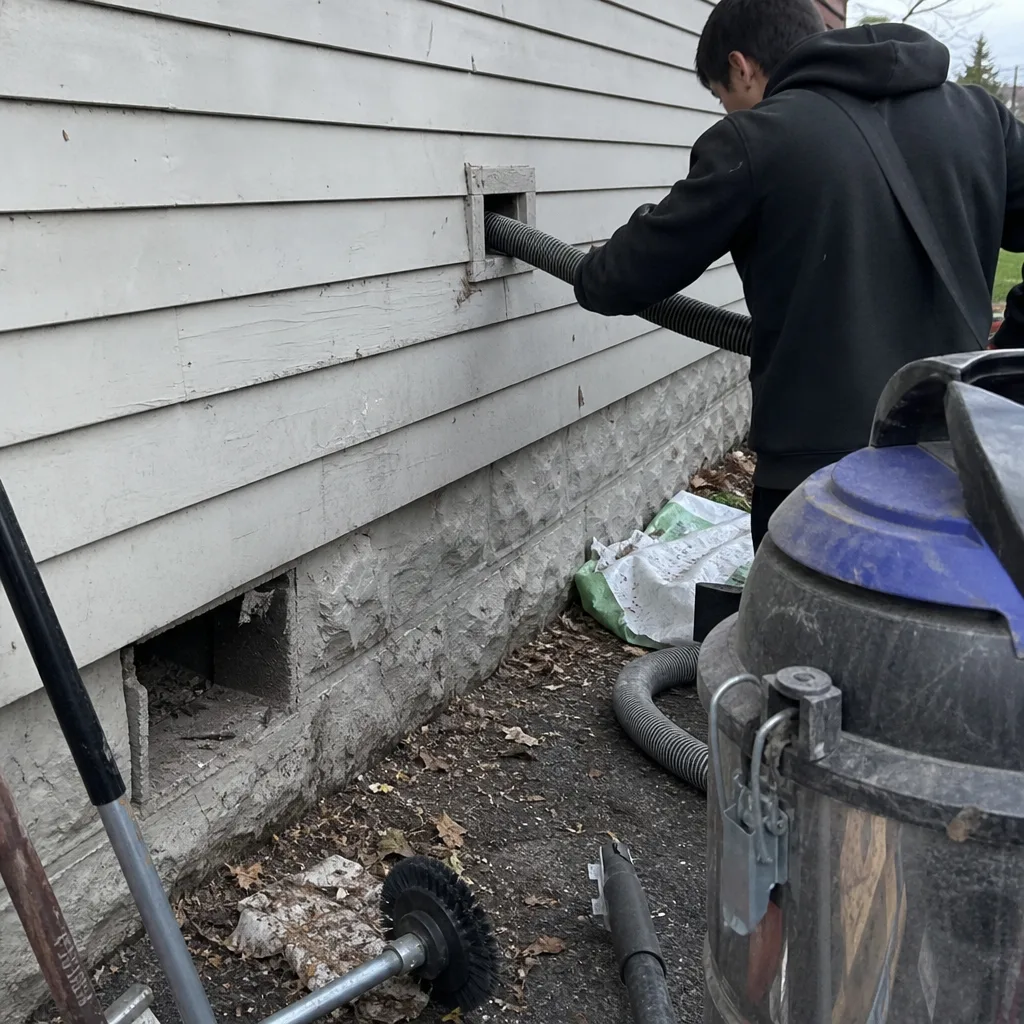 Before
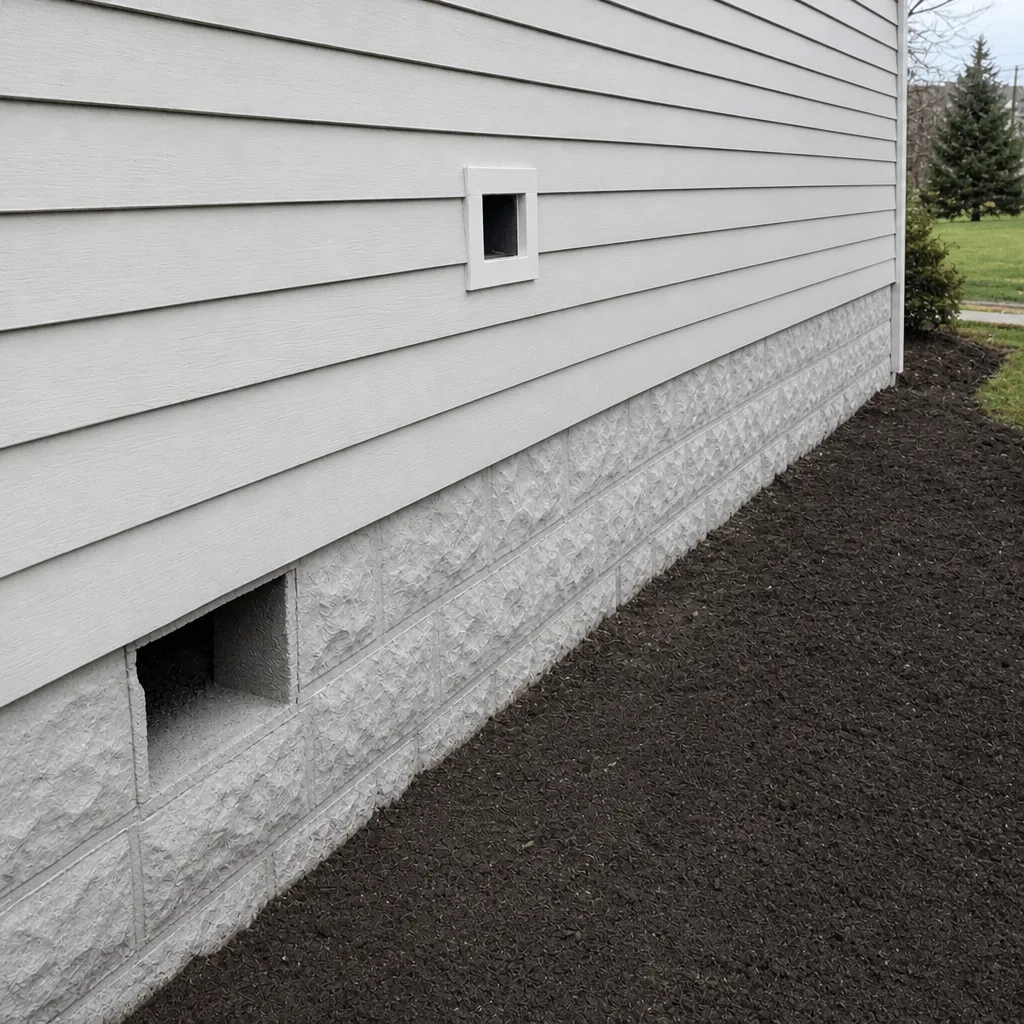 After
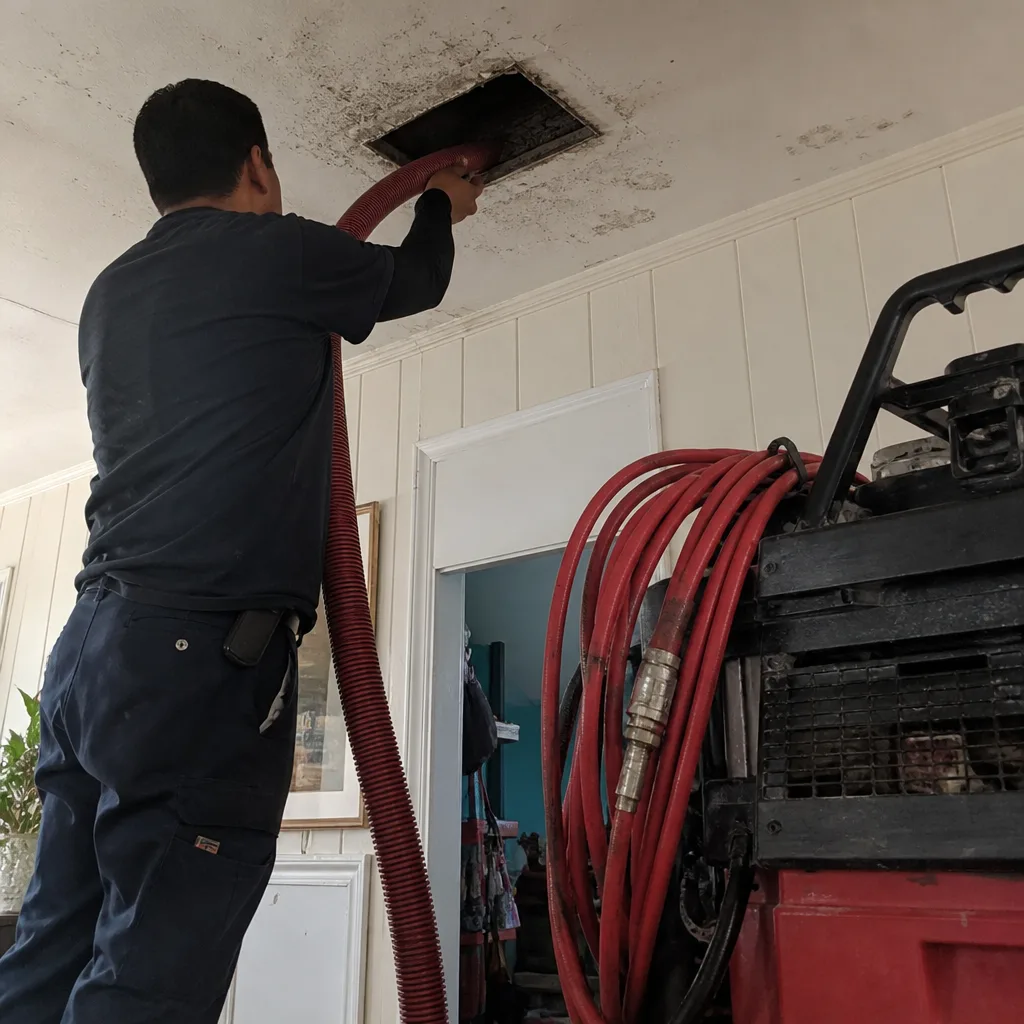 Before
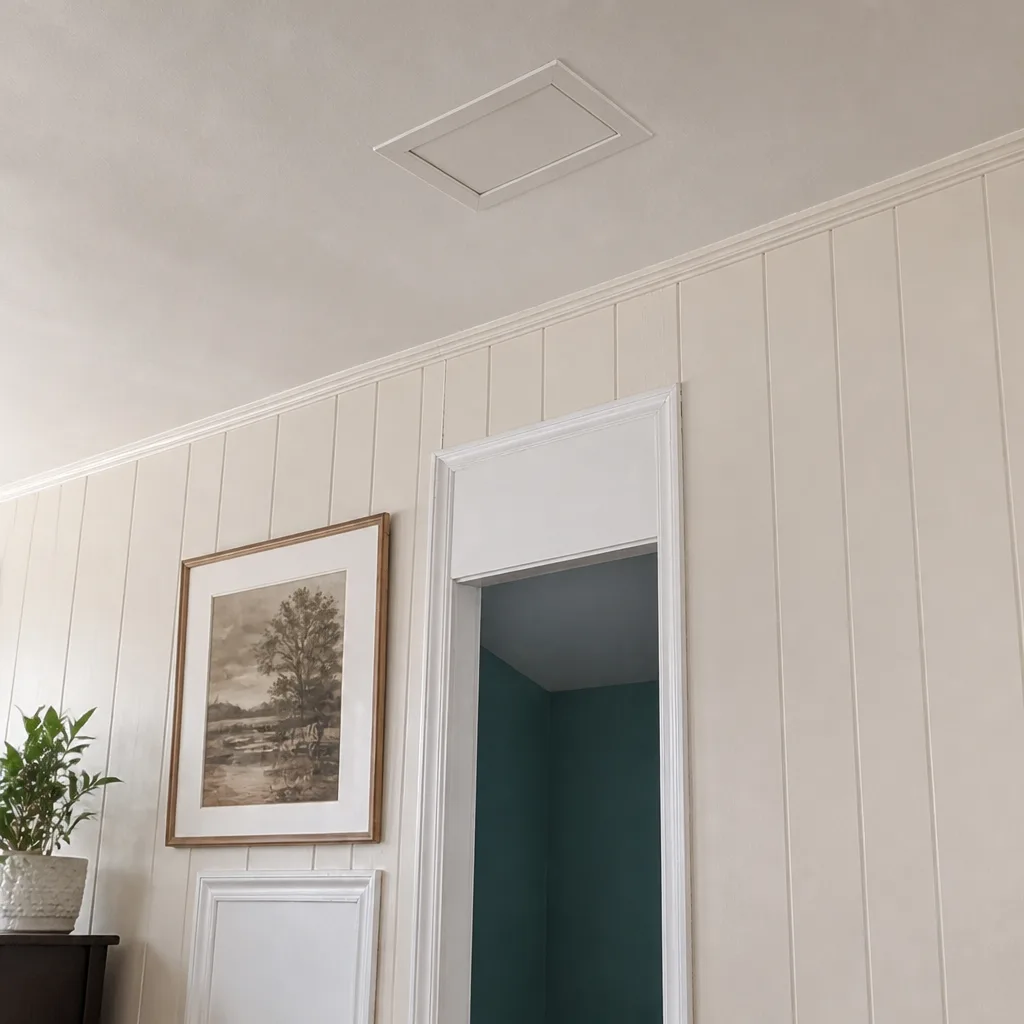 After
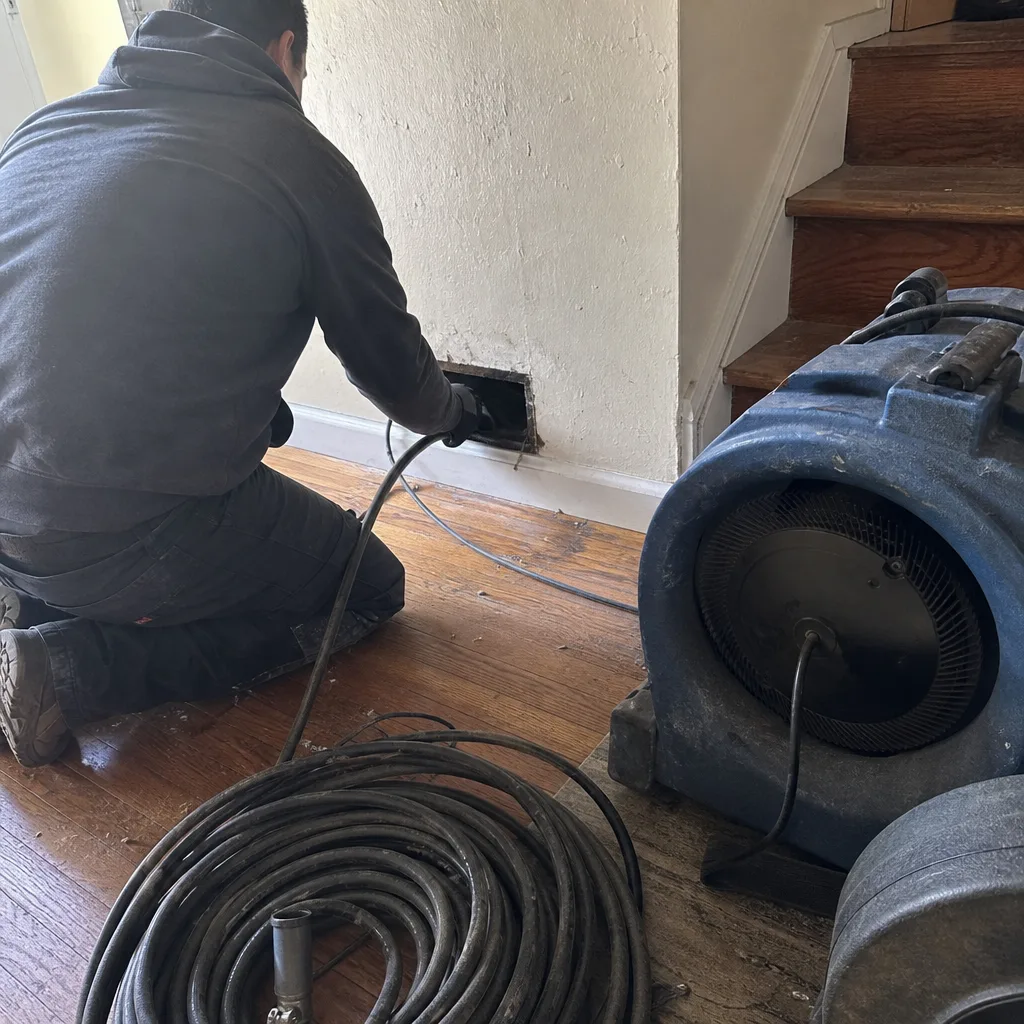 Before
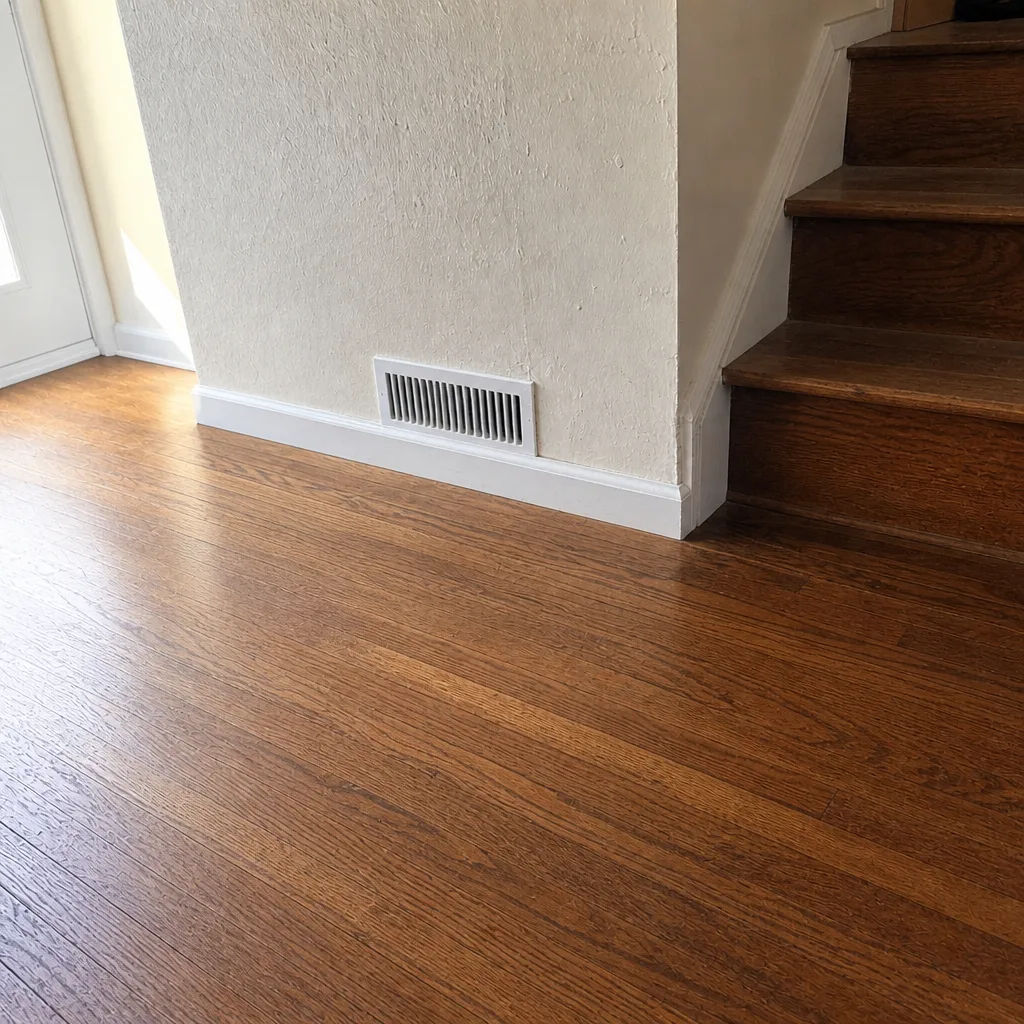 After
When to Call a Professional
Some duct problems can’t be safely diagnosed or fixed by a homeowner, and those are the ones to hand off. Call a professional if your ducts still look dirty after a cleaning and before-and-after photos weren’t taken; if you smell musty or moldy air and it returns within days; if one or more rooms stay cold or hot despite cleaning; if a register has noticeably weak airflow after a cleaning; if you see visible mold on the air handler, drain pan, or duct liner; or if a renovation or water intrusion has happened since the last cleaning. High-tension components, electrical panels, gas lines, and anything inside the air handler are not DIY territory, so leave the coil, blower, and wiring to a trained technician. Our technicians have up to 9 years of experience. Air Duct Cleaning Throggs Neck offers free estimates in Throggs Neck. Call (866) 558-4773. We answer 24/7. Fast dispatch from 7am to 7pm, Sunday through Friday.
Frequently Asked Questions
Dust that returns quickly usually comes from a source the cleaning didn’t address: a leaking duct joint pulling attic or wall cavity dust in, a dirty air handler coil or blower redistributing it, a failing blower motor, or an undersized return starving the system. In Throggs Neck, older ductwork with dried tape at the joints is a common culprit. The fix is identifying the source, often sealing or HVAC component cleaning, rather than another vacuuming pass.
Because the smell is rarely in the ducts. It’s usually microbial growth on the evaporator coil or condensate pan, or a micro-tear in the flex duct liner pulling humid air from a crawl space or wall cavity. Cleaning the ducts can’t fix either. The right next step is an HVAC cleaning that addresses the coil and pan, plus an inspection of the flex runs for tears or gaps.
It varies with system size and condition, so the honest answer is a written estimate after a look at your system, not a phone quote. The point to watch for is any per-vent price or coupon teaser, because the real question is whether the job covers the branches, the return, and containment, which a low headline price usually doesn’t. Call (866) 558-4773 for a free estimate, with the price set per job by the written estimate before work starts.
Cheap quotes usually reflect a smaller machine, no containment, a main-trunk-only scope, or no ability to repair what’s found. A professional-grade system with containment and a branch-by-branch inspection takes real equipment and real time, and that’s what makes a cleaning last. Ask what equipment will be used, whether before-and-after photos are part of the job, and whether repair and sealing are in scope if a problem turns up.
Ask for before-and-after photos of your own ducts. That’s the evidence. If a provider can’t show you what changed inside your system, you have no way to judge the job. A full-system cleaning with professional-grade equipment produces photos of the trunk, the branches, and the return, not just a receipt. Call (866) 558-4773 for a free estimate.
For most homes, a full-system cleaning every few years is reasonable, with more frequent cleaning after major renovations, water intrusion, animal shedding, or a move-in. The frequency depends on what’s actually in the system, how well it’s sealed, and how the air handler is maintained. If you’re noticing musty odor or re-soiling sooner than expected, the schedule isn’t the issue, the duct integrity or the air handler is. Call (866) 558-4773 for a free estimate and a look at the system.
The Bottom Line
Most duct cleaning complaints in Throggs Neck aren’t cleaning failures. They’re duct integrity problems, coil and drain pan growth, bypass leakage, undersized returns, or blower issues that keep redistributing what was cleaned. The register test, the smell pattern, the uneven temperatures, and static pressure readings all point to which category you’re in. A second cleaning is warranted only when the first one was underpowered or partial. When the cause is a leak or a component, sealing and HVAC cleaning fix the root. Diagnose first, then schedule the right service. Call (866) 558-4773. We answer 24/7. Fast dispatch from 7am to 7pm, Sunday through Friday.
Written by the team at Air Duct Cleaning Throggs Neck.